




“Microsoft has unveiled a new generation of powerful Windows PCs designed to run increasingly sophisticated artificial-intelligence workloads directly on personal computers, reducing reliance on cloud computing for some tasks. However, the high cost of the new hardware, driven partly by expensive memory components, could make advanced local AI computing accessible mainly to businesses, developers and wealthy consumers.”
South Africa Watches the Rise of the AI PC as Local Computing Enters a New Era
The personal computer industry is entering another important phase as artificial intelligence moves from being primarily a cloud-based service to becoming a capability built directly into high-performance computers. Microsoft has now placed this transition at the centre of its Windows strategy, unveiling powerful new hardware and software designed to allow AI agents and advanced AI models to operate locally on PCs.
The development is particularly significant for the broader computing industry because it could change how people use computers. Instead of sending every demanding AI request to a remote data centre, some workloads could increasingly be processed on the user’s own laptop or desktop. Microsoft is promoting this hybrid approach as a way to combine the enormous capabilities of cloud computing with the privacy, speed and potentially lower long-term costs associated with local processing.
For South Africa, the development matters because the country is increasingly dependent on digital services, cloud platforms, software development, artificial intelligence and advanced computing infrastructure. South African businesses and technology professionals are already watching how AI will affect productivity, cybersecurity and infrastructure requirements. At the same time, the country’s technology market remains sensitive to hardware prices, exchange rates and access to high-performance computing equipment.
Microsoft targets the next generation of computers
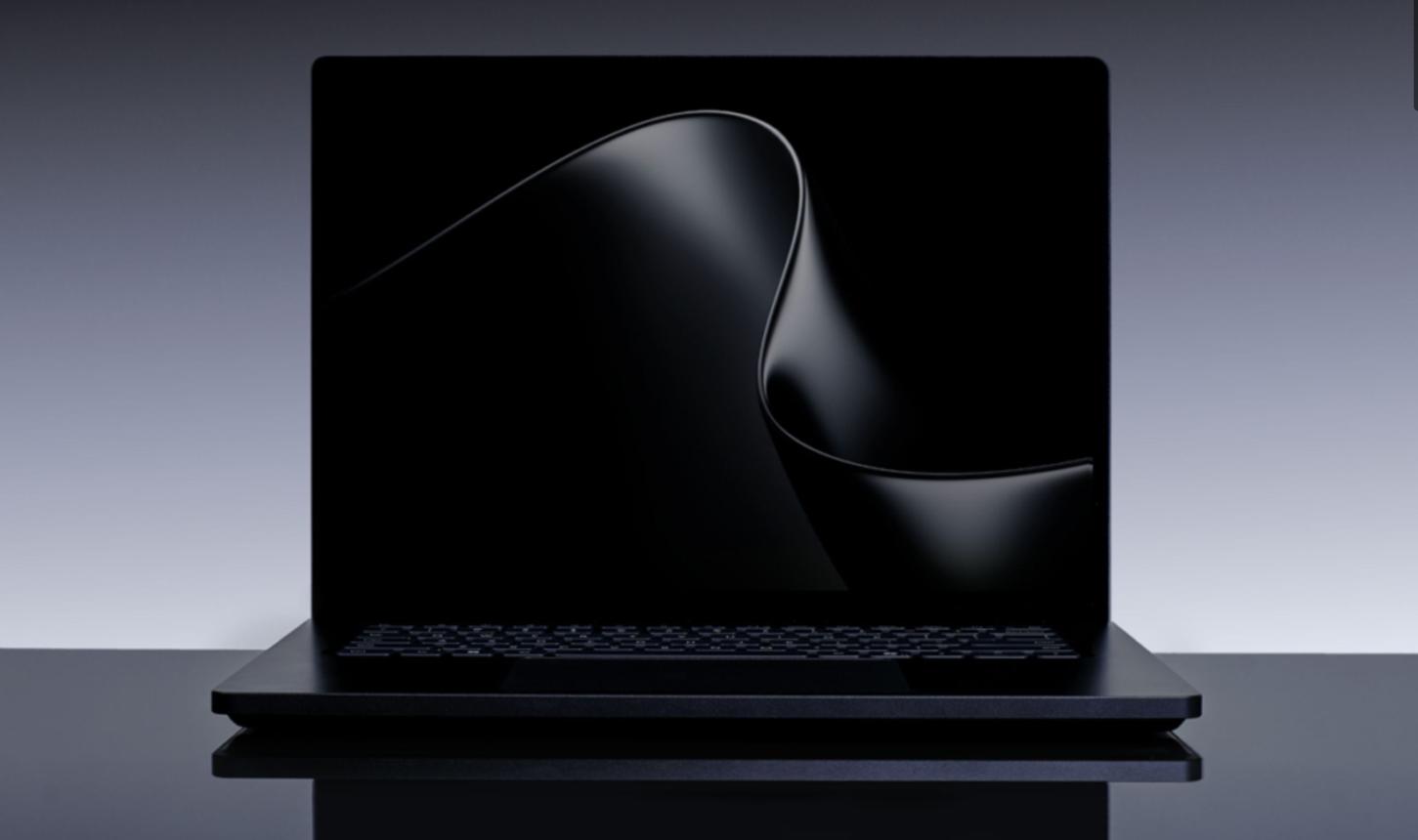
Microsoft’s latest strategy centres on turning Windows into a platform capable of supporting sophisticated AI agents directly on personal computers. At an event in San Francisco, the company introduced the Surface Laptop Ultra, a high-performance computer using Nvidia’s RTX Spark technology.
The device is aimed at users who need substantial computing power for AI development and other demanding workloads. Microsoft is also introducing software and security technologies intended to allow AI agents to operate on PCs while restricting their ability to access information or perform unauthorised actions.
This is an important change in the traditional relationship between PCs and cloud computing. For years, increasingly powerful AI applications have depended heavily on remote data centres equipped with specialised processors and enormous amounts of memory. Users interact with an application on a computer or smartphone, but much of the actual computation happens somewhere else.
The new generation of AI PCs seeks to move at least some of that processing back to the device.
That does not mean cloud computing is disappearing. Microsoft has made clear that its approach is a combination of local and cloud processing. The company’s Copilot strategy, for example, can continue sending particularly demanding tasks to the cloud while allowing suitable workloads to run on the computer itself.
Why local AI computing matters
Running AI locally has several potential advantages.
The first is privacy. If a workload can be processed locally, sensitive information may not need to leave the user’s computer and travel to a remote cloud service. This could be particularly valuable for businesses handling confidential financial information, intellectual property, customer data or proprietary documents.
The second advantage is latency. A locally running model does not necessarily need to send a request across the internet and wait for a remote server to process it. For certain applications, that could make AI interactions faster and more responsive.
The third is cost control. Cloud AI services can involve ongoing usage charges, particularly for organisations processing large volumes of data. Local hardware requires a significant upfront investment, but companies may determine that owning computing capacity makes financial sense for specific workloads.
However, these advantages depend heavily on the performance of the hardware and the efficiency of the software. Powerful local AI requires powerful processors, graphics systems and substantial memory.
That is where the industry’s biggest challenge currently emerges.
High prices could slow AI PC adoption
Microsoft’s new Surface Laptop Ultra starts at US$2,599 and can reach US$5,899 for a configuration with a 20-core processor, 128GB of memory and 1TB of storage. That places the machine firmly in the premium computing market rather than the mainstream laptop category.
For South African consumers, the international price is only part of the equation. Imported technology can become considerably more expensive after currency conversion, taxes, distribution costs and local retail margins are taken into account. As a result, a premium AI computer could be considerably less accessible to ordinary consumers than its US dollar price initially suggests.
The timing is also significant because the global technology industry is experiencing strong demand for memory components from AI infrastructure. Data-centre operators require enormous quantities of advanced memory for AI accelerators and servers. That pressure has affected the broader memory market and contributed to higher hardware costs.
Reuters reported that the price of Microsoft’s new hardware reflects this wider challenge. The company had previously promoted AI PCs partly around the idea that moving certain workloads from expensive cloud infrastructure to personal computers could reduce costs. Yet the price of the hardware needed to run those workloads locally has itself become a significant barrier.
This creates an interesting contradiction for the computing industry: local AI can reduce dependence on cloud resources, but the computers capable of running advanced AI locally are becoming expensive.
Nvidia’s growing role in personal computing
Another major development is Nvidia’s expanding role in the PC market.
Nvidia has historically been best known for graphics processors used in gaming, professional visualisation and data centres. However, the AI boom has transformed the company into one of the most important suppliers of computing technology for artificial intelligence.
Its RTX Spark platform is now being positioned as a way to bring substantial AI processing capability to Windows PCs. Microsoft is using the technology in its high-end Surface Laptop Ultra, while other PC manufacturers are also developing RTX Spark systems. ASUS, for example, announced ProArt laptops and a mini PC powered by Nvidia RTX Spark, with configurations offering up to 128GB of unified memory.
This suggests that AI computing is becoming a major differentiator in the PC market.
For decades, consumers often compared computers using measures such as processor speed, RAM, storage capacity, screen resolution and graphics performance. Increasingly, another question is becoming important: how much AI processing can the computer perform locally?
That could eventually influence purchasing decisions among software developers, creative professionals, researchers, engineers and business users.
AI agents create a new security challenge
The shift toward local AI also introduces a new computing-security problem.
Traditional software generally performs actions according to relatively predictable instructions. AI agents can operate more dynamically. They may interpret instructions, access files, interact with applications and attempt to complete multi-step tasks.
That makes security especially important.
Microsoft has introduced Microsoft Execution Containers, or MXC, to provide a controlled environment in which AI agents can operate. The company says the technology is designed to prevent agents from accessing data or performing actions without authorisation. Anthropic, OpenAI and Nvidia are among the companies expected to use the technology.
This reflects a broader concern across the technology sector: as AI systems become more capable, giving them greater access to computers also increases the consequences of mistakes, compromised agents or malicious instructions.
For businesses, therefore, buying an AI PC will not simply be a hardware decision. Organisations will also need policies governing what AI applications can access, what actions they can perform and when human approval is required.
South Africa’s opportunity in the AI computing transition
South Africa has an opportunity to participate in this transformation beyond simply importing new computers.
Local software developers can build applications designed to take advantage of increasingly capable hardware. Universities and research institutions can explore local AI models and specialised computing workloads. Businesses can investigate whether local processing makes sense for confidential or high-volume applications.
The country’s education sector is also under pressure to prepare students for an increasingly AI-driven economy. South Africa’s Higher Education and Training Minister Buti Manamela recently called on universities to prepare students for an AI-driven world while strengthening the country’s skills and research capacity.
That makes developments in computing hardware especially relevant. Advanced AI software requires people who understand not only how to use AI applications but also how computer architecture, data, cybersecurity, cloud infrastructure and AI models interact.
The growth of local AI computing could therefore create opportunities in software engineering, cybersecurity, data science, computer engineering, AI research and technical support.
Cloud computing will remain important
Despite the excitement surrounding AI PCs, there is little evidence that local computing will replace cloud infrastructure.
The most realistic future is likely to be hybrid.
A personal computer could handle routine AI tasks locally while sending more demanding workloads to a cloud provider. A business could keep sensitive information on local systems while using cloud infrastructure for large-scale model training. Developers could test smaller models on their own machines and use data centres when they require significantly more processing power.
Microsoft itself is pursuing this hybrid model. Its Copilot strategy is designed to use cloud resources for the hardest workloads while delegating suitable tasks to local models when privacy or cost makes local processing attractive.
This could eventually create a more flexible computing environment in which the location of computation becomes less important to the user.
The biggest question is affordability
The technology behind AI PCs is advancing rapidly, but adoption will ultimately depend on economics.
High-end machines costing thousands of dollars may be attractive to professional developers and businesses, but ordinary consumers are unlikely to replace affordable laptops simply because they contain more powerful AI hardware.
The industry will therefore need to bring advanced AI capabilities into increasingly affordable computers.
This is especially important for developing markets such as South Africa, where access to advanced digital technology is closely connected to affordability. If high-performance AI computing remains concentrated among wealthy consumers and large companies, its benefits could be distributed unevenly.
However, as competition increases and hardware technology improves, capabilities that initially appear exclusive could gradually move into mainstream PCs.
Conclusion
The arrival of Microsoft’s latest AI-focused PCs represents an important development in the history of personal computing. The PC is evolving from a device that primarily runs applications into a machine capable of executing increasingly sophisticated AI agents and models locally.
Microsoft’s partnership with Nvidia demonstrates how central AI acceleration has become to the future of Windows. At the same time, the introduction of security technologies such as Microsoft Execution Containers shows that the industry recognises the risks associated with giving autonomous AI systems greater access to personal computers.
For South Africa, the development presents both opportunities and challenges. Local AI computing could strengthen privacy, reduce dependence on cloud services for some workloads and create new opportunities for developers and technology professionals. However, expensive hardware and global memory shortages could limit access in the short term.
The most important development may therefore not be the arrival of one particular laptop. Instead, it is the beginning of a broader transition in which AI becomes a fundamental part of the computer itself.
As prices eventually fall and software improves, the distinction between a conventional PC and an AI computer may disappear altogether. The computer of the future may simply be expected to understand instructions, work with information, operate software and perform increasingly complex tasks locally — while seamlessly connecting to the cloud whenever additional computing power is required.



