




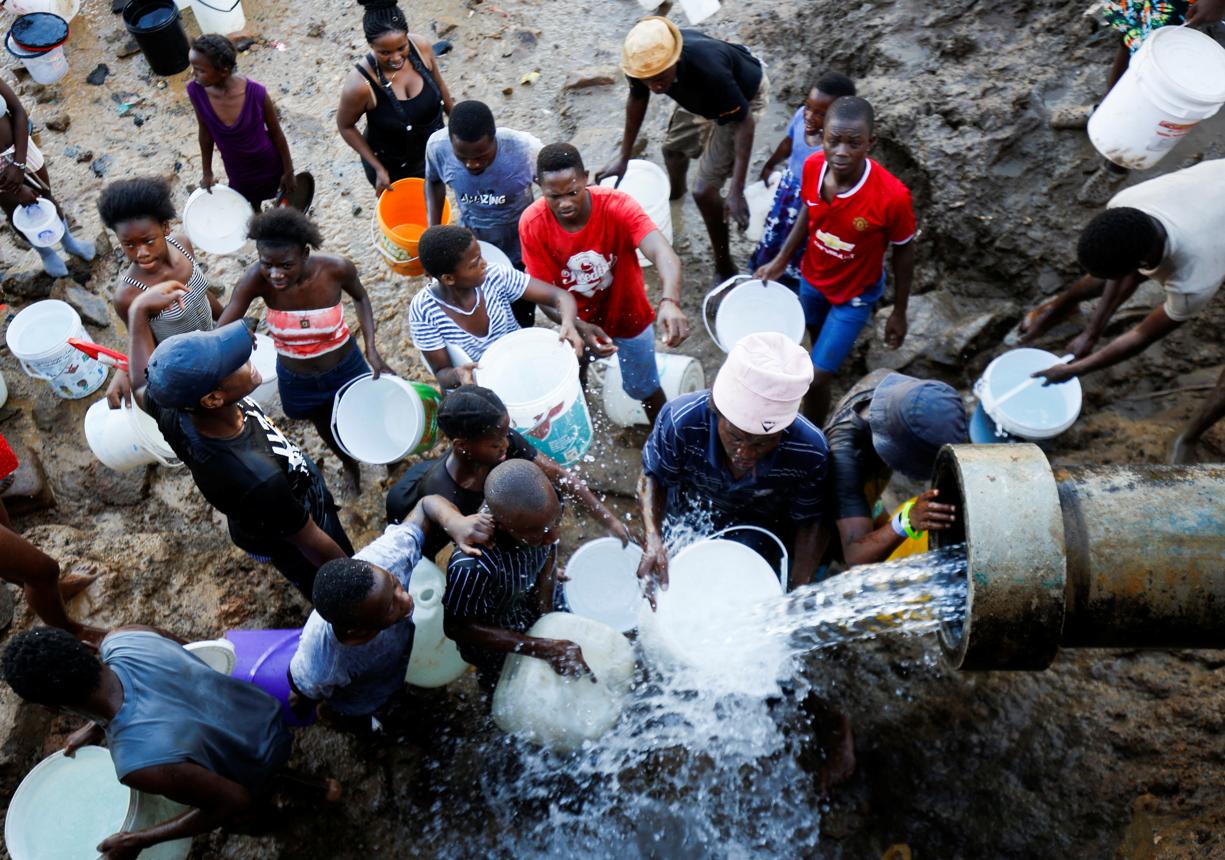
“A GroundUp report published on 8 October 2026 highlights how South African communities are increasingly caught between flooding, drought, pollution and unreliable municipal water systems. The report shows that climate change is intensifying existing weaknesses caused by ageing infrastructure, inadequate maintenance, limited municipal capacity and years of underinvestment.”
South Africa’s water crisis is becoming increasingly difficult to describe as a simple problem of drought or inadequate rainfall. A report published on 8 October 2026 highlights how communities across the country are being caught between two damaging extremes: flooding that destroys water infrastructure and dry conditions that leave households without reliable supplies. The central warning is that climate change is magnifying weaknesses that already exist in municipal water systems, including ageing pipes, poor maintenance, limited technical capacity, pollution and years of underinvestment.
The report focuses on communities in Mpumalanga, Gauteng, the Free State, KwaZulu-Natal and the Eastern Cape, where residents face different versions of the same crisis. In Carolina, residents have raised concerns about contaminated water associated with pollution and sewage. In Bekkersdal, unreliable supply forces families to find alternative sources, while communities affected by flooding continue to deal with damaged infrastructure.
The significance of the story goes beyond individual municipal failures. It shows how climate risk and infrastructure risk are increasingly becoming the same problem.
Climate Pressure Meets Infrastructure Weakness
South Africa is a water-scarce country, which makes the condition of its municipal networks especially important. The Department of Water and Sanitation’s No Drop assessment found that national non-revenue water reached about 47% in 2023, meaning that almost half of water entering municipal systems was lost or not paid for. The department identified leaks, faulty or missing meters, illegal connections, poor billing and weak revenue collection among the causes. The international average is about 30%.
Those losses matter even more when climate conditions become less predictable. A municipality can prepare for drought, but if treated water disappears through damaged pipes, the available supply is reduced before it reaches households. Intense rainfall can also overwhelm infrastructure already weakened by inadequate maintenance.
This creates a damaging cycle. Drought reduces available water, while floods damage the systems needed to distribute it. Pollution can make already scarce water unsafe, increasing treatment costs and placing further pressure on municipal budgets. Weak administration then slows repairs and long-term investment.
The result is that climate change does not need to create a water crisis from scratch. It can intensify a crisis that already exists.
Communities Pay the Highest Price
The human consequences are immediate. When taps run dry, households must spend time and money finding alternatives. Poorer households are hit hardest because they have fewer alternatives and less money to absorb additional costs.
The impact extends beyond drinking water. Reliable water is necessary for cooking, washing, sanitation, healthcare, education and work. When supply becomes unpredictable, ordinary routines become difficult, particularly for children, workers and families.
Water quality creates another layer of risk. Restoring pressure to pipes does not solve contamination concerns. People need functioning treatment facilities, monitoring, rapid responses to pollution incidents and transparent communication.
Floods and the Hidden Cost of Climate Damage
South Africa’s recent experience with severe flooding demonstrates why water infrastructure must be designed for changing climate conditions. KwaZulu-Natal and parts of the Eastern Cape have experienced destructive rainfall that damaged homes, roads, bridges and water systems.
The April 2022 KwaZulu-Natal floods remain a major example. According to the report, more than 40,000 people were displaced, almost 4,000 homes were destroyed and another 8,300 were partially damaged. The provincial government estimated the damage at about R17 billion.
The effects of such disasters do not disappear when floodwaters recede. Pipes can remain broken, treatment plants may require rehabilitation and communities can experience unreliable supplies for months or years. Damaged infrastructure may also remain vulnerable to the next extreme event.
Adaptation therefore needs to be treated as infrastructure policy, not simply disaster response. Stronger pipelines, protected treatment plants, restored wetlands, improved drainage and early-warning systems can reduce future damage. Preventive maintenance can also be cheaper than emergency reconstruction.
A National Problem Requiring Local Capacity
The National Water Action Plan released in July 2026 recognises the need for infrastructure investment, improved municipal performance, regulatory reforms and stronger action against corruption and criminality in the water sector. The plan is important because it treats the crisis as a systemic challenge rather than a collection of isolated outages.
However, implementation remains the critical test.
Parliament’s Portfolio Committee on Water and Sanitation warned in June that municipalities were failing to implement corrective action plans. It also noted that the national average level of non-revenue water remained almost unchanged at 47.3%, compared with 47.4% in the 2023 assessment. Meanwhile, the committee reported that the proportion of wastewater systems classified as being in critical condition increased from 39% in 2022 to 47% in 2025.
These figures point to a persistent maintenance and governance problem. Investment will not be enough if municipalities cannot plan projects, maintain assets, monitor contractors and account for expenditure.
Climate adaptation requires exactly those capabilities.
The Technology and Science Challenge
The crisis also raises questions about how South Africa can use innovation to improve water resilience.
Technology can help municipalities detect leaks through sensors, pressure monitoring and digital meters. Satellite imagery and geographic information systems can help monitor catchments, land degradation and flood risks. Weather forecasting and early-warning systems can help communities prepare for extremes.
Nature-based solutions also deserve greater attention. Wetlands, healthy river systems and restored catchments can slow runoff, improve water quality and strengthen resilience. Protecting ecosystems can therefore become part of water infrastructure planning rather than being treated as a separate environmental concern.
Technology should not substitute for basic maintenance. Monitoring platforms cannot repair broken pipes or replace trained engineers and water-quality specialists. Digital systems are valuable when municipalities can act on the information they produce.
Water Justice and the Future
The emerging lesson is that South Africa’s water challenge is increasingly a question of resilience and justice. Communities that contributed least to global greenhouse-gas emissions can still experience the harshest consequences of drought, flooding, pollution and infrastructure failure.
The answer requires cooperation among government, municipalities, engineers, scientists, communities and businesses, alongside transparent spending, stronger pollution enforcement and sustained maintenance.
Most importantly, water planning must anticipate a climate that is less predictable than the one for which many existing systems were designed.
South Africa cannot control every drought or prevent every flood. It can decide whether infrastructure is maintained, pollution is addressed quickly, warnings reach communities and investments are designed for climate conditions.
The report provides a warning that should not be ignored. When communities are simultaneously exposed to flooding and dry taps, the problem is not simply that South Africa has too little water. The deeper problem is that the country is struggling to manage, protect and distribute the water it has.
The path forward will require more than emergency tankers or temporary repairs. It will require a long-term national effort to rebuild water infrastructure, strengthen municipal institutions, protect ecosystems and use science and technology intelligently. If those measures are implemented effectively, climate adaptation can become an opportunity to modernise the water sector while protecting vulnerable communities.
If they are delayed, the gap between communities with secure water and those living with constant uncertainty is likely to widen. South Africa’s environmental future will therefore depend not only on rainfall, rivers and reservoirs, but also on the quality of decisions made today.



