




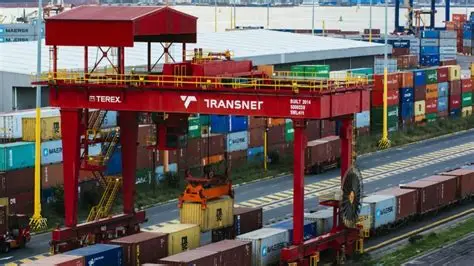
“South Africa’s Transnet National Ports Authority has opened a tender for a private operator to modernize and manage the multipurpose terminal at the Port of Cape Town for 25 years. The move aims to address severe inefficiency issues after the port was ranked the worst in the world, with implications for trade competitiveness and economic growth.”
South Africa’s trade infrastructure has long been a bottleneck for economic growth, with inefficiencies in ports and freight transport undermining competitiveness. On 21 July 2026, Transnet National Ports Authority (TNPA) announced a tender for a private operator to upgrade and manage the multipurpose terminal at the Port of Cape Town. This development marks a pivotal moment in South Africa’s trade reform agenda, as the country seeks to modernize critical infrastructure and attract investment.
Background: Port of Cape Town’s Challenges
The Port of Cape Town is a vital hub for South Africa’s exports and imports, handling dry bulk cargo such as coal, ore, and grain, as well as breakbulk cargo too large for standard containers. Yet, inefficiency has plagued operations. In 2025, the World Bank and S&P Global Ratings ranked Cape Town the worst port globally for efficiency, citing delays, poor equipment maintenance, and inadequate management systems.
These inefficiencies have had ripple effects across the economy:
- Exporters face higher costs and delays.
- Importers struggle with unpredictable timelines.
- South Africa’s reputation as a reliable trade partner suffers.
The Tender Details
The TNPA tender offers a 25-year concession to a private operator, who will be responsible for upgrading infrastructure, improving cargo handling, and introducing modern management practices. At the end of the concession, the terminal will revert to Transnet. This model mirrors the Durban Pier 2 Terminal deal awarded in 2023 to International Container Services Incorporated (ICTSI), a Filipino ports giant.
Key aspects of the tender include:
- Infrastructure investment: Modern cranes, digital logistics systems, and expanded storage facilities.
- Operational efficiency: Streamlined cargo handling to reduce turnaround times.
- Job creation: Potential for thousands of direct and indirect jobs.
Economic Implications
The tender is part of South Africa’s broader infrastructure modernization drive, supported by a $1.5 billion loan from the World Bank announced earlier this month.
Trade competitiveness: Improved port efficiency will lower costs for exporters, particularly in agriculture and mining. Regional integration: Cape Town’s port is a gateway for trade with Europe and the Americas; modernization could strengthen South Africa’s role in global supply chains. Employment: Infrastructure upgrades are expected to create nearly 600,000 jobs nationwide, with Cape Town benefiting significantly.
Risks and Challenges
While the tender offers hope, challenges remain:
- Litigation risk: The Durban Pier 2 deal faced months of legal battles, delaying implementation.
- Political resistance: Labor unions may oppose privatization, fearing job losses.
- Global volatility: Commodity price swings and geopolitical tensions could undermine trade gains.
Expert Perspectives
Economists argue that private sector involvement is essential to break the cycle of inefficiency. Kenneth Creamer, presidential economic adviser, recently noted that capital availability is not South Africa’s main constraint—structural inefficiencies are.
Trade analysts highlight that without urgent reforms, South Africa risks losing market share to competitors like Kenya and Nigeria, whose ports are undergoing rapid modernization.
Conclusion
The Port of Cape Town tender represents a watershed moment for South Africa’s trade infrastructure. If successful, it could transform the country’s global competitiveness, attract investment, and create jobs. However, execution risks remain high, and stakeholders will closely watch how Transnet manages the process.



