




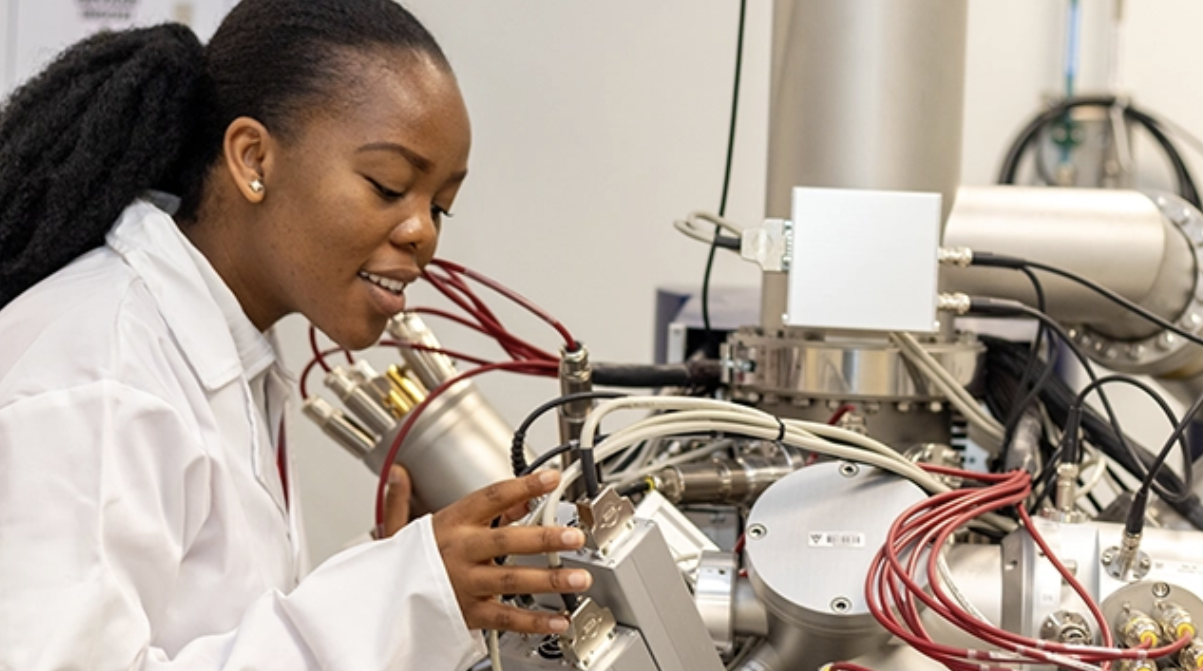
“African scientists and engineers have unveiled Africa2Moon, the continent’s first lunar radio telescope mission, which will ride aboard China’s Chang’e-8 mission in 2029. The project aims to open up the lowest-frequency radio sky, a cosmic frontier invisible from Earth due to atmospheric interference.”
South Africa has taken a bold step into the future of astronomy and space exploration with the announcement of Africa2Moon, a pioneering mission that will place a working radio telescope array on the lunar surface. This initiative, revealed in Nature Astronomy and spearheaded by Rhodes University, represents the first all-African space exploration mission. It is not only a scientific milestone but also a symbol of Africa’s growing presence in the global space economy.
The Mission Concept
The Africa2Moon project will deploy a set of antennas—called the Bounced African Low Lunar Spheres (BALLS)—on the Moon’s far side. These antennas are designed to capture radio waves below 20 MHz, a frequency range completely blocked by Earth’s atmosphere. By situating the telescope on the Moon, scientists will gain access to a previously hidden part of the cosmic spectrum.
This mission is scheduled to launch aboard China’s Chang’e-8 mission in 2029, targeting the lunar south pole. The collaboration highlights Africa’s ability to integrate into international space partnerships while contributing unique expertise.
Scientific Importance
Radio astronomy has revolutionized our understanding of the universe, revealing pulsars, quasars, and cosmic microwave background radiation. Yet, the lowest-frequency radio sky has remained inaccessible. The Moon’s far side offers a pristine environment, shielded from Earth’s radio noise and solar interference.
By opening this “last unexplored band of the radio sky,” Africa2Moon could uncover signals from the early universe, potentially shedding light on the cosmic dark ages—the period before the first stars and galaxies formed.
South Africa’s Role
South Africa has already established itself as a global leader in radio astronomy through projects like MeerKAT and its participation in the Square Kilometre Array (SKA). The expertise developed in these projects directly feeds into Africa2Moon.
Professor Oleg Smirnov, Rhodes University’s Research Chair in Radio Astronomy Techniques and Technologies, emphasized that this mission is “Africa stepping off the planet.” It demonstrates that African scientists are not only participants but leaders in frontier science.
Broader Impact
Beyond science, Africa2Moon is a statement of ambition. It shows that African nations can collaborate to achieve audacious goals. Dr. Adriana Marais, Director of the Foundation for Space Development Africa, noted that the mission is “proof that African scientists and engineers can imagine something audacious and then build it, together.”
This project also inspires the next generation of African learners, linking space exploration with education and innovation.
Challenges Ahead
Deploying instruments on the Moon is no small feat. Engineers must design hardware that can withstand extreme temperatures, radiation, and lunar dust. The BALLS antennas incorporate solar panels and electronics boxes to ensure functionality in such harsh conditions.
Moreover, the mission requires seamless coordination with China’s Chang’e-8 program, demanding international collaboration at the highest levels.
Global Context
Africa2Moon joins a growing list of lunar science missions worldwide. NASA’s Artemis program, China’s Chang’e series, and India’s Chandrayaan missions all aim to expand humanity’s presence on the Moon. Africa’s entry into this arena signals a diversification of global space leadership.
Conclusion
The Africa2Moon mission is more than a scientific experiment—it is a declaration that Africa is ready to contribute to humanity’s exploration of the cosmos. By opening a new window on the universe, South Africa and its partners are not only advancing astronomy but also reshaping perceptions of Africa’s role in science and technology.



