




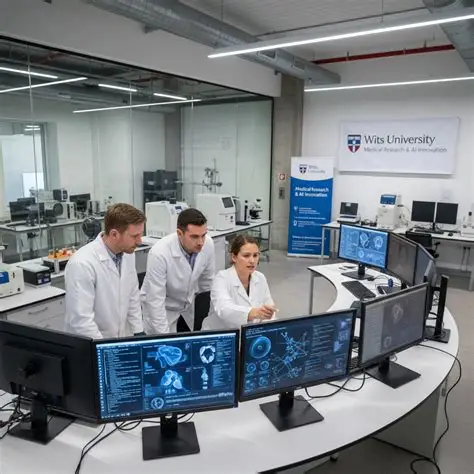
“Researchers at Wits University, in collaboration with African and international partners, conducted the largest population-representative survey of African gut metagenomes to date, identifying over 1,005 previously unrecorded bacterial genomes. In a pioneering move, they returned individualized microbiome results to participants, strengthening trust, improving health awareness, and setting a new ethical benchmark for biotechnology research in Africa.”
Biotechnology in Africa has often been framed around the challenges of limited resources, infrastructure, and access to cutting-edge research. Yet, a new study led by Wits University in South Africa has shifted the narrative by not only producing groundbreaking scientific discoveries but also ensuring that participants directly benefit from the knowledge generated. This initiative, embedded within the Africa Wits-INDEPTH partnership (AWI-Gen2), represents a turning point in how biotechnology research engages with communities.
The Landmark Study
The AWI-Gen2 study, published in Nature, is the largest survey of African gut metagenomes ever conducted. Researchers analyzed samples from 778 women across South Africa and Kenya, uncovering 1,005 bacterial genomes not represented in existing global reference collections. This discovery significantly expands scientific understanding of how geography, lifestyle, and health shape microbiome composition in African populations.
Participant Engagement
Traditionally, microbiome studies rarely return individualized results to participants, especially in low-resource settings, due to the complexity of interpreting technical data. However, Wits researchers developed culturally appropriate educational materials and conducted face-to-face feedback sessions in local languages. This approach allowed participants to understand their gut microbiome profiles in ways that were both ethical and comprehensible.
Ethical Breakthrough
The feedback initiative was published in mSystems and is considered a landmark in participant engagement. By embedding feedback as a routine component of microbiome research, the study demonstrated that complex scientific information can be effectively shared when adapted to cultural contexts. Participants overwhelmingly welcomed the results, reporting improved understanding of gut health and increased trust in the research process.
Health Impacts
Beyond trust, the initiative had tangible health impacts. Many participants reported that the information encouraged them to adopt healthier dietary choices, particularly increasing their intake of fiber-rich foods. This highlights the potential of biotechnology not only to advance science but also to directly influence public health behaviors.
Global Significance
The study’s findings resonate globally. In an era where biotechnology often faces criticism for being extractive, this initiative shows how African-led research can redefine ethical standards. By prioritizing participant benefit, the AWI-Gen2 project sets a precedent for future studies worldwide.
Institutional Collaboration
The project was spearheaded by the Sydney Brenner Institute for Molecular Bioscience (SBIMB) at Wits University, with contributions from the SAMRC/Wits Rural Public Health and Health Transitions Research Unit (Agincourt), the SAMRC/Wits Ageing African Adult Research Unit (A3RU), the African Population and Health Research Centre (Kenya), and Stanford University (USA). This collaboration underscores the importance of cross-continental partnerships in advancing biotechnology.
Challenges and Solutions
Returning microbiome results in low-resource settings is costly and complex. Yet, the study proved that with community-centered communication strategies, these challenges can be overcome. The initiative demonstrates that ethical engagement is not a luxury but a necessity for sustainable scientific progress.
Future Directions
The success of this initiative opens doors for similar feedback mechanisms in other areas of biotechnology, including genomics, infectious disease research, and personalized medicine. It also strengthens Africa’s position in global biotechnology by showcasing innovative approaches to participant-centered science.
Conclusion
The African-led microbiome feedback initiative is more than a scientific milestone—it is a paradigm shift in biotechnology ethics and engagement. By returning results to participants, Wits University and its partners have set a new global standard, proving that science can be both groundbreaking and deeply human-centered.



