




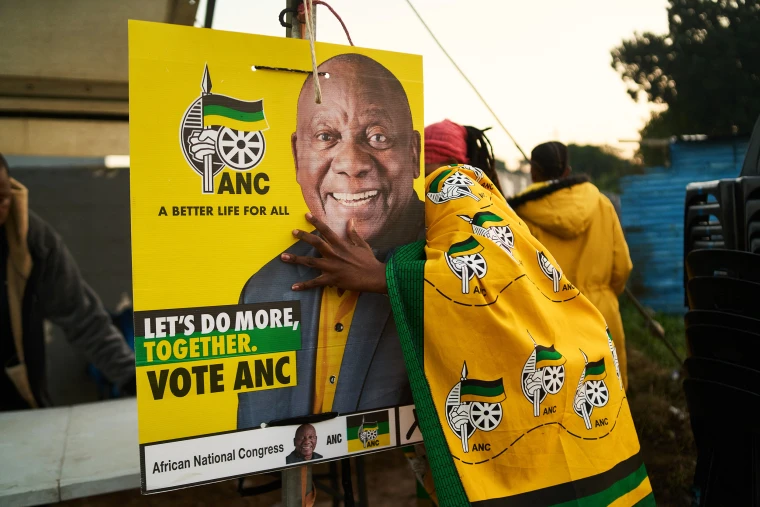
“The ANC successfully defended its seat in Bushbuckridge Municipality, while the DA retained control in Rustenburg Municipality during the 24 June 2026 municipal by-elections. These results reaffirm the entrenched positions of South Africa’s two largest political parties as the nation prepares for the pivotal Local Government Elections in November 2026.”
South Africa’s political landscape continues to be shaped by the rivalry between the African National Congress (ANC) and the Democratic Alliance (DA. The municipal by-elections held on 24 June 2026 in Mpumalanga and North West provinces provided a critical snapshot of voter sentiment ahead of the much-anticipated Local Government Elections (LGE) scheduled for 4 November 2026. The ANC retained its seat in Bushbuckridge Municipality, while the DA held onto Rustenburg Municipality, reinforcing their respective strongholds and signaling the challenges smaller parties face in breaking through entrenched voter loyalties.
Context of the By-Elections
By-elections are often seen as a litmus test for broader national sentiment. In this case, the contests in Bushbuckridge and Rustenburg were closely watched for signs of shifting allegiances. The ANC, despite facing criticism over governance issues and service delivery, managed to secure its position in Bushbuckridge. Meanwhile, the DA, which has built a reputation for stronger municipal management in certain regions, successfully defended Rustenburg.
These outcomes suggest that while dissatisfaction with governance exists, voters remain cautious about shifting their support to smaller or newer parties. The results also underscore the importance of local dynamics, where community-specific issues often outweigh national narratives.
ANC’s Retention in Bushbuckridge
Bushbuckridge Municipality, located in Mpumalanga, has long been an ANC stronghold. The party’s ability to retain its seat reflects both historical loyalty and the effectiveness of its grassroots mobilization. The ANC’s campaign emphasized continuity, promising to address service delivery challenges while leveraging its legacy as the liberation movement.
However, the victory was not without challenges. Opposition parties attempted to capitalize on frustrations over water shortages, unemployment, and infrastructure decay. Despite these issues, the ANC’s organizational strength and ability to mobilize voters ensured its success.
DA’s Hold in Rustenburg
In Rustenburg Municipality, the DA’s retention of its seat highlights its appeal in urban and semi-urban areas where governance and service delivery are paramount. Rustenburg, a mining hub, faces unique challenges related to labor disputes, housing shortages, and environmental concerns. The DA’s campaign focused on pragmatic solutions, emphasizing accountability and efficiency in municipal governance.
The DA’s victory reinforces its narrative as a party capable of delivering better governance at the local level. It also strengthens its position as the primary opposition to the ANC nationally, particularly in municipalities where service delivery is a pressing issue.
Implications for Smaller Parties
The by-elections also underscored the difficulties faced by smaller parties such as the Economic Freedom Fighters (EFF) and newer entrants like the Umkhonto Wesizwe Party (MKP). Despite attempts to challenge the dominance of the ANC and DA, these parties struggled to make significant inroads. Their limited success highlights the entrenched nature of South Africa’s two-party dominance in many municipalities.
Voter Registration Momentum
The by-elections coincided with a national voter registration drive ahead of the November elections. The Electoral Commission of South Africa (IEC) reported that close to 3 million voters updated their details during the registration weekend of 20–21 June 2026. This surge in participation reflects strong public interest in the upcoming elections and underscores the importance of civic engagement.
Broader Political Significance
The outcomes of these by-elections carry broader significance for the November polls. For the ANC, retaining Bushbuckridge demonstrates resilience despite mounting criticism. For the DA, holding Rustenburg reinforces its credibility as a viable alternative in urban municipalities. Together, these results suggest that the November elections will likely see continued competition between the two dominant parties, with smaller parties struggling to break the duopoly.
Looking Ahead to November 2026
The Local Government Elections scheduled for 4 November 2026 will be a defining moment for South Africa’s democracy. With nearly 28 million registered voters, the stakes are high. The ANC will seek to consolidate its dominance, while the DA aims to expand its footprint. Smaller parties will continue to push for relevance, but the by-election results suggest they face an uphill battle.
The IEC has launched a comprehensive campaign under the tagline “Get Up, Show Up, Vote,” aimed at encouraging participation, particularly among young voters. The success of this campaign will be critical in determining turnout and shaping the legitimacy of the election outcomes.



