




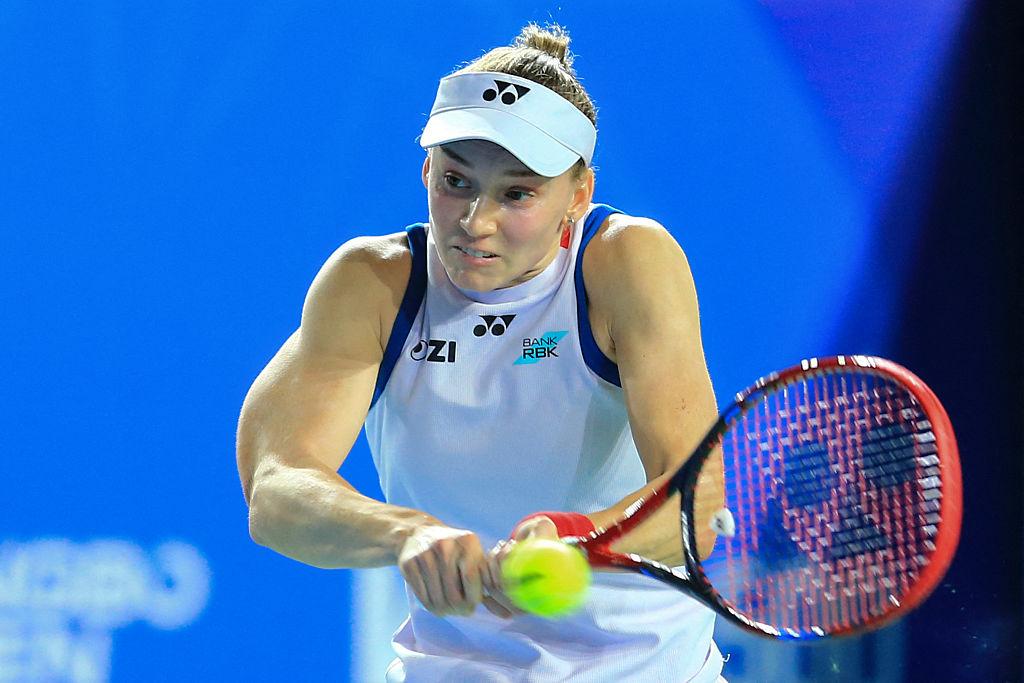
“Defending champion Elena Rybakina defeated Russia’s Diana Shnaider 6–3, 7–5 on Saturday to reach the Ningbo Open final in China, where she was scheduled to face Canadian Leylah Fernandez on Sunday, 25 October. The victory offered Rybakina an opportunity to defend her title and strengthen her preparations for the upcoming WTA Finals, despite recent injury concerns and inconsistencies in her serving.”
Rybakina’s Ningbo campaign provides a compelling international tennis storyline
South African tennis followers have another major international contest to follow as the 2026 professional tennis season approaches its decisive final weeks. Kazakhstan’s Elena Rybakina advanced to the Ningbo Open final after defeating Russia’s Diana Shnaider in straight sets, setting up a meeting with Canada’s Leylah Fernandez on Sunday. Although this is an international tournament rather than a South African domestic competition, its significance extends to tennis enthusiasts following the leading players, competitive standards and season-ending championships.
According to Reuters, Rybakina secured a 6–3, 7–5 victory over Shnaider in the semifinal played on Saturday, 24 October. The defending champion demonstrated the effectiveness of her aggressive groundstrokes while negotiating difficult moments that threatened to complicate her progress. Fernandez also won her semifinal in straight sets, defeating Czech player Marie Bouzkova 6–3, 7–5 to earn her place in the championship match.
The resulting final brought together two players with contrasting competitive journeys. Rybakina entered the tournament as the defending champion and one of the leading figures in women’s tennis, while Fernandez arrived as an unseeded contender seeking another significant title.
For South African readers, the matchup offers an opportunity to examine the qualities required to succeed at the highest level of the sport, including serving accuracy, tactical flexibility, physical preparation and composure under pressure.
Rybakina overcomes difficult moments against Shnaider
Rybakina’s semifinal victory was not entirely straightforward. Although she established control with powerful baseline hitting, her performance included moments when she struggled to finish important games. The Russian left-hander challenged her rhythm, forcing the defending champion to work hard for crucial points.
Rybakina eventually secured the opening set 6–3, but Reuters reported that she required 11 set points to close it out. That detail highlighted the difference between creating opportunities and converting them efficiently. Against a determined opponent, a player can dominate long stretches of a match without immediately translating that advantage into a decisive scoreline.
The second set presented another examination of her concentration. Rybakina moved ahead 4–3 after breaking Shnaider’s serve, only for the Russian to respond by breaking back to love in the tenth game. The setback could have shifted the momentum towards Shnaider, particularly because Rybakina had already experienced difficulties with her first serve.
Instead, the Kazakh responded with aggressive hitting and regained the advantage before serving out the match.
Her victory illustrated a central principle of professional tennis: successful players must recover quickly when an opponent disrupts their preferred game plan. Even when technical execution becomes inconsistent, the ability to make sound decisions at decisive moments can determine the outcome.
Rybakina acknowledged the challenge presented by Shnaider, noting that left-handed opponents can create particular difficulties because players encounter fewer of them on tour. She also admitted that changing patterns during rallies had been challenging. Nevertheless, she was pleased to finish the match in two sets.
The importance of serving and tactical adaptability
Serving remained one of the central talking points of Rybakina’s semifinal performance. At the elite level, a reliable first serve can create opportunities to control rallies immediately, reduce pressure on subsequent shots and protect a player’s service games.
However, serving effectiveness involves more than raw power. Placement, variation, consistency and the ability to respond to returns all contribute to a player’s performance. When first serves become unreliable, opponents can attack second serves and put additional pressure on the server.
Rybakina’s difficulties closing certain games showed why even highly accomplished players must maintain technical discipline throughout a match. Against opponents capable of striking the ball aggressively, a short period of declining accuracy can change the complexion of a set.
Tactical adaptability is equally important. Shnaider’s left-handed game challenged Rybakina to adjust the direction and rhythm of her rallies. Players must recognise when their normal patterns are ineffective and find alternative ways to create space, change the pace or move opponents away from comfortable positions.
These lessons are relevant to developing South African players. Coaches working with junior and professional competitors can use international matches to illustrate how match preparation, opponent analysis and in-game decision-making influence performance.
Rather than focusing exclusively on the final score, young players can benefit from studying how elite competitors respond to pressure, recover after losing important points and maintain concentration throughout long service games.
Fernandez presents a different challenge
Rybakina’s opponent in the final was Leylah Fernandez, who reached the championship match by defeating Marie Bouzkova 6–3, 7–5. Her victory demonstrated an ability to manage a competitive semifinal and convert opportunities against a player capable of extending rallies and contesting important points.
Fernandez entered the final without a seed, but that designation did not diminish the significance of her achievement. Tournament seedings reflect rankings and entry positions rather than guaranteeing the outcome of individual matches.
Unseeded players can become increasingly dangerous as a tournament progresses, particularly when they build confidence through successive victories. Reaching a final also provides experience in managing the expectations and pressures associated with competing for a title.
The matchup therefore offered an interesting tactical contrast. Rybakina’s powerful groundstrokes and experience as defending champion would be tested by Fernandez’s competitive resilience and ability to challenge an opponent’s rhythm.
Reuters reported that Rybakina had identified the difficulty of facing left-handed opponents during her semifinal. Fernandez would present a similar tactical consideration, making the final an opportunity for Rybakina to demonstrate whether she could make adjustments more efficiently.
The result of the final was not established in the cited semifinal report. Consequently, the preview should not be interpreted as confirmation of either player’s eventual victory.
Injury management adds another dimension
Rybakina’s route to the final carried additional significance because of recent physical concerns. Reuters reported that she had arrived in Ningbo after a heavy defeat in Beijing and a foot injury that forced her to withdraw from the Wuhan Open.
Returning to competitive form after an injury requires careful management. Players must balance the need to compete at a high level with the risk of placing excessive strain on a recovering body.
The process can involve monitoring workload, adjusting practice intensity, coordinating with medical professionals and evaluating recovery between matches. A player may feel ready to compete but still need to manage fatigue and avoid aggravating a lingering problem.
For a defending champion, these decisions can be especially complicated. The opportunity to win another title is attractive, but a demanding schedule can also affect preparation for more important tournaments later in the season.
Rybakina’s progress in Ningbo suggested that she was able to compete effectively during the tournament, although the semifinal report did not establish that all injury concerns had disappeared.
South African tennis players can draw an important lesson from this situation. Sustainable performance depends not only on technical skill and physical conditioning but also on appropriate recovery, medical guidance and realistic workload management.
For emerging professionals who travel extensively to compete, these considerations can be particularly important because the costs of international participation can make rest and scheduling decisions difficult.
Why international tournaments matter to South African tennis
South Africa has a longstanding tennis tradition, but developing internationally competitive players requires sustained investment in coaching, facilities, tournament access and player support.
International events such as the Ningbo Open provide examples of the competitive standards that aspiring professionals must meet. They demonstrate the importance of technical consistency, mental resilience, strategic preparation and the ability to recover from setbacks during matches.
South African tennis supporters can follow these competitions to understand the wider professional calendar and the demands facing players at the top of the sport.
At the same time, international coverage should complement rather than replace reporting on domestic achievements. South African junior tournaments, national championships, professional events and wheelchair tennis competitions all contribute to the development of the sport.
Tennis South Africa’s published news has highlighted junior competition, international representation, national club championships and the Davis Cup team. These activities demonstrate the range of pathways through which players can progress and represent the country.
For the domestic game to benefit from greater international attention, exposure needs to be accompanied by opportunities for participation. Young athletes need accessible coaching, suitable courts, competitive matches and financial support that allows promising players to advance.
International stars can inspire participation, but local structures determine whether that interest translates into sustained development.
The wider significance of the season-ending championships
Rybakina’s progress in Ningbo also formed part of her preparations for the WTA Finals, scheduled to begin on 8 November according to the Reuters report. The tournament represents a major objective for leading players because it brings together elite competitors at the end of the season.
Preparation for such an event involves more than winning individual matches. Players must assess their physical condition, refine tactical patterns and manage the demands of a crowded calendar.
A successful performance in Ningbo could provide useful match practice and confidence, but the benefits would depend on how effectively Rybakina maintained her form and managed recovery in the following weeks.
For Fernandez, the final offered a chance to pursue another major title and strengthen her position among the season’s notable performers.
For tennis audiences, the meeting illustrated the depth of competition in women’s tennis. Established champions face constant challenges from opponents seeking breakthrough victories, while emerging contenders attempt to turn promising runs into lasting success.
That competitive environment is part of what makes the professional tour compelling. Rankings and previous titles establish expectations, but individual matches still require players to perform under pressure.
What South African fans should watch next
The immediate storyline was the Ningbo Open final between Rybakina and Fernandez on Sunday, 25 October. The match offered an opportunity to assess Rybakina’s serving consistency, tactical adjustments and physical readiness following her earlier injury concerns.
Beyond the final, the approaching season-ending championships will provide another measure of the leading players’ ability to sustain performance late in the year.
South African tennis followers should also continue monitoring domestic developments through Tennis South Africa and established local sports publications. National tournaments, junior results and international selections are important indicators of progress within the local game.
The distinction between international and domestic reporting remains essential. Rybakina’s run in China is an important international tennis story, but it is not evidence of a new South African tournament result or a South African player’s achievement.
Responsible sports reporting should maintain that distinction while explaining why international developments matter to local audiences.
Conclusion
Elena Rybakina’s semifinal victory over Diana Shnaider placed her one match away from defending her Ningbo Open title. Her 6–3, 7–5 win demonstrated the value of aggressive baseline play and persistence, while her serving difficulties showed that even leading professionals must solve technical and tactical problems under pressure.
The scheduled final against Leylah Fernandez offered another compelling contest as the 2026 season moved towards its closing stages. For South African tennis fans, the tournament provided a useful opportunity to follow elite competition and examine the skills required to succeed internationally.
However, the available reporting does not establish a major South Africa-specific tennis story published on 25 October 2026. The Ningbo Open therefore serves as the strongest verified related international story identified in this search, while local tennis developments should be covered separately when confirmed reporting becomes available.



