




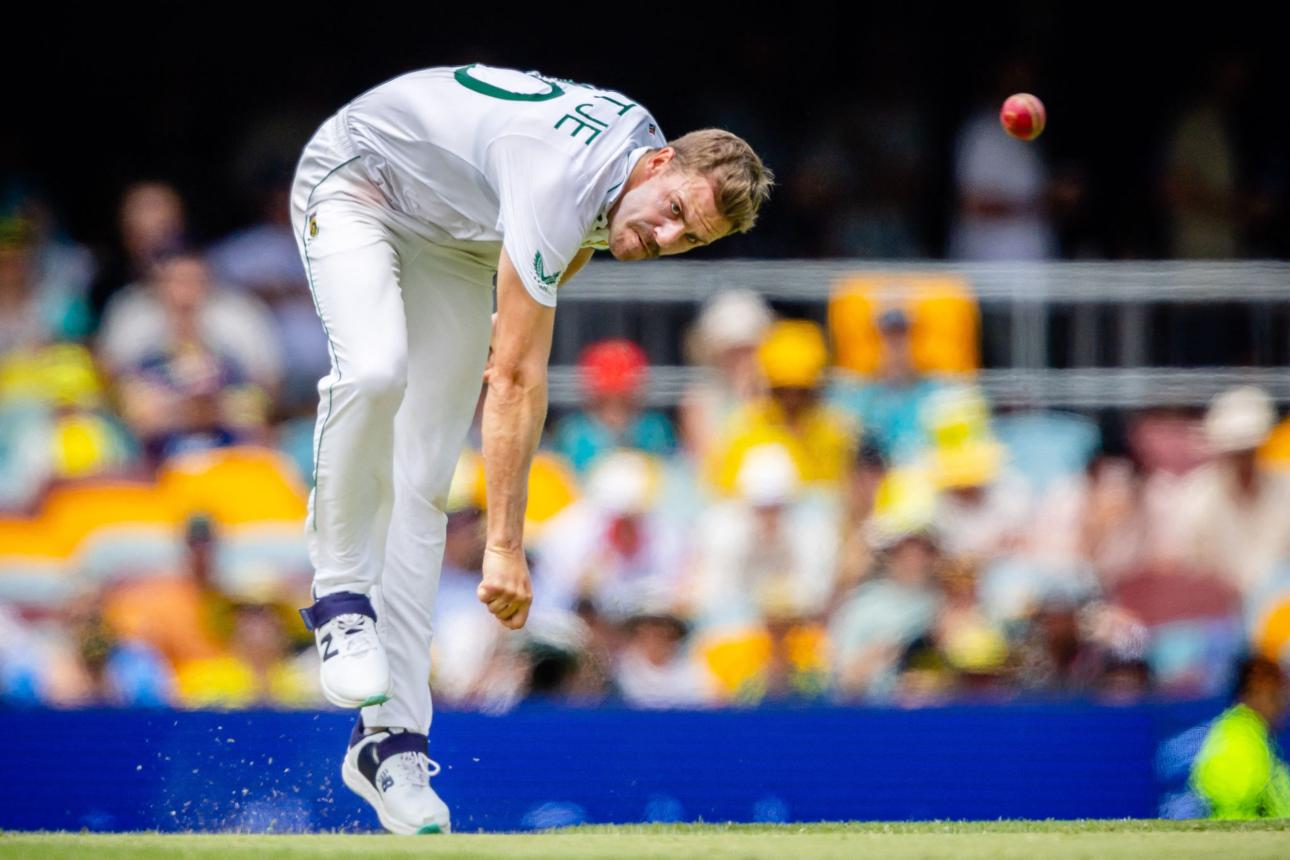
“South Africa have suffered a setback ahead of the third Test against Australia after fast bowler Anrich Nortje was ruled out with a groin injury sustained during the second Test in Gqeberha. With the series level at 1–1 following South Africa’s emphatic innings-and-31-run victory, the Proteas must adjust their bowling combination as they prepare for the deciding match at Newlands.”
Anrich Nortje Injury Tests South Africa’s Depth Ahead of Decisive Australia Test
South African cricket has received an unwelcome setback ahead of the decisive third Test against Australia, with fast bowler Anrich Nortje ruled out after suffering a groin injury during the second match in Gqeberha. The injury comes at a crucial stage of the series, with the Proteas having recovered from their opening defeat to level the contest and give themselves an opportunity to finish the home summer’s major Test assignment with a series victory.
The third Test is scheduled to begin on Tuesday, 27 October 2026, at Newlands Cricket Ground in Cape Town. South Africa and Australia enter the final match with one victory apiece, creating a compelling finish to a contest that has already featured contrasting performances, challenging conditions and significant individual contributions.
Nortje’s injury creates a selection challenge
Cricket South Africa confirmed Nortje’s withdrawal on Saturday, 24 October, following an injury sustained while bowling during the first innings of the second Test. Subsequent scans revealed the extent of the problem, which has prevented the fast bowler from being available for the series finale.
The setback is particularly disappointing because Nortje had returned to Test cricket after an extended period affected by injuries. His pace and ability to challenge batters with aggressive short-pitched deliveries have made him an important option when available. However, fast bowling places considerable physical demands on the body, and groin injuries can make repeated high-intensity bowling difficult.
The decision to rule him out means South Africa must consider its remaining resources carefully. Although losing an established fast bowler reduces the available options, the squad still contains several seamers who could be considered for the final match.
According to the published squad announcement, South Africa have retained a 16-player group for the decider. The available options include Kagiso Rabada, Marco Jansen, Gerald Coetzee, Corbin Bosch and Dane Paterson, alongside specialist spin choices. The final playing eleven will depend on the selectors’ assessment of conditions, player fitness and the balance required for Newlands.
South Africa’s impressive response in Gqeberha
The injury news arrives after South Africa produced a commanding performance in the second Test at St George’s Park. Having lost the opening match in Durban by 214 runs, the Proteas faced pressure to respond. Their subsequent innings-and-31-run victory restored balance to the series and demonstrated their ability to recover from a difficult defeat.
Captain Temba Bavuma was central to that turnaround. His innings of 179 helped South Africa establish control and provided the foundation for a strong team performance. Rather than allowing the opening defeat to define the series, the home side responded with greater determination and delivered the kind of sustained performance required in Test cricket.
The second match also underlined the importance of contributions across the batting and bowling departments. South Africa needed runs substantial enough to put Australia under pressure, but those runs would only become decisive if the bowlers could exploit the advantage.
They achieved that objective, restricting Australia and securing a victory by a substantial margin. The result transformed the series from a contest in which Australia held the advantage into a one-match battle for the trophy.
That momentum could prove valuable in Cape Town. Nevertheless, the Proteas cannot assume that success in Gqeberha guarantees another strong performance. Each Test presents different conditions and tactical demands, while Australia will have an opportunity to adjust after their defeat.
Who could replace Nortje?
South Africa’s selection decision will be one of the central talking points before the third Test. The selectors must determine whether to maintain a pace-heavy attack, introduce additional spin or select a combination that offers flexibility across different stages of the match.
Gerald Coetzee is among the seam-bowling options available to the selectors. His ability to generate pace makes him a potential candidate if South Africa want to retain an aggressive approach. Corbin Bosch also offers a possible alternative, while Dane Paterson provides another seam-bowling option within the squad.
Marco Jansen and Kagiso Rabada are additional key resources. Jansen brings left-arm pace and the potential to contribute with the bat, while Rabada offers considerable international experience and the ability to attack established batters. Their workloads and the overall balance of the attack will be important considerations.
The selectors must also assess the conditions expected at Newlands. Pitch characteristics, overhead conditions and the likelihood of movement can influence whether a team prefers an additional specialist fast bowler or a more varied attack. It would be premature to declare one replacement certain before the playing eleven is announced.
Spin remains another consideration. Simon Harmer featured prominently in the second Test, while Keshav Maharaj provides a further specialist option. The decision to select a spinner or an additional seamer will depend on the surface and the team’s preferred strategy.
Ultimately, replacing Nortje is not simply a matter of finding a player who bowls quickly. The successful candidate must fit into a collective plan that manages workloads, maintains pressure and gives the captain enough options to respond when Australia begin building partnerships.
Australia’s opportunity to respond
Australia will arrive at Newlands knowing that the series remains within reach. Their victory in Durban demonstrated their capacity to put South Africa under pressure, but the second Test exposed weaknesses they must address if they are to win the deciding match.
The visitors will need their batters to build longer partnerships and withstand South Africa’s bowling attack. A competitive first innings could be particularly important because it would prevent the hosts from establishing the same degree of control they achieved in Gqeberha.
Australia will also study how their batters approached South Africa’s bowling in the second Test. Identifying ways to counter Rabada, Jansen and the other available bowlers will be essential, particularly if the Newlands surface offers assistance to the seamers.
The Proteas, meanwhile, will need to guard against complacency. Their recent victory has improved their position, but Australia remain a formidable opponent. The deciding Test will require sustained concentration rather than reliance on the confidence generated by one successful match.
Nortje’s absence may influence the contest, but it does not automatically make Australia favourites. The outcome will depend on execution, fitness, tactical decisions and the ability of both teams to respond to changing match situations.
Why the Newlands Test matters
A series decider carries importance beyond the immediate result. For South Africa, a victory would reinforce the value of their recovery after losing the opening Test. It would also provide evidence that the squad can respond to adversity and deliver under pressure.
The match offers an opportunity for players competing for places to demonstrate their value. If a replacement for Nortje receives the opportunity to play, his performance could influence future selection discussions. At the same time, experienced players will be expected to provide leadership and maintain the standards required at international level.
The contest also highlights the challenges of managing fast-bowling workloads. International cricket demands repeated high-intensity efforts, and teams must balance the need for experienced players with the importance of protecting their long-term availability. Nortje’s withdrawal is a reminder that even carefully prepared squads can be affected by injuries at decisive moments.
For supporters, the third Test promises a compelling conclusion to a closely contested series. South Africa have already demonstrated that they can recover from a heavy defeat, while Australia have shown they can win convincingly when conditions and execution favour them.
Conclusion
South Africa’s preparations for the third Test against Australia have been complicated by Anrich Nortje’s groin injury. His absence removes an important fast-bowling option just as the Proteas prepare for a decisive match at Newlands, scheduled to begin on 27 October.
Nevertheless, the hosts retain several experienced and promising bowling alternatives. Their challenge will be to select the right combination, manage workloads effectively and carry the confidence of their Gqeberha victory into the final contest.
Australia, for their part, will seek to correct the shortcomings exposed in the second Test and regain control of the series. With the score level at 1–1, both teams have a clear incentive to produce their strongest performances.
The central question is whether South Africa can maintain their recent momentum despite losing Nortje, or whether Australia can exploit the disruption to secure the series. The answer will emerge at Newlands, where selection decisions, disciplined batting and effective bowling are likely to determine which side finishes the series on top.



