




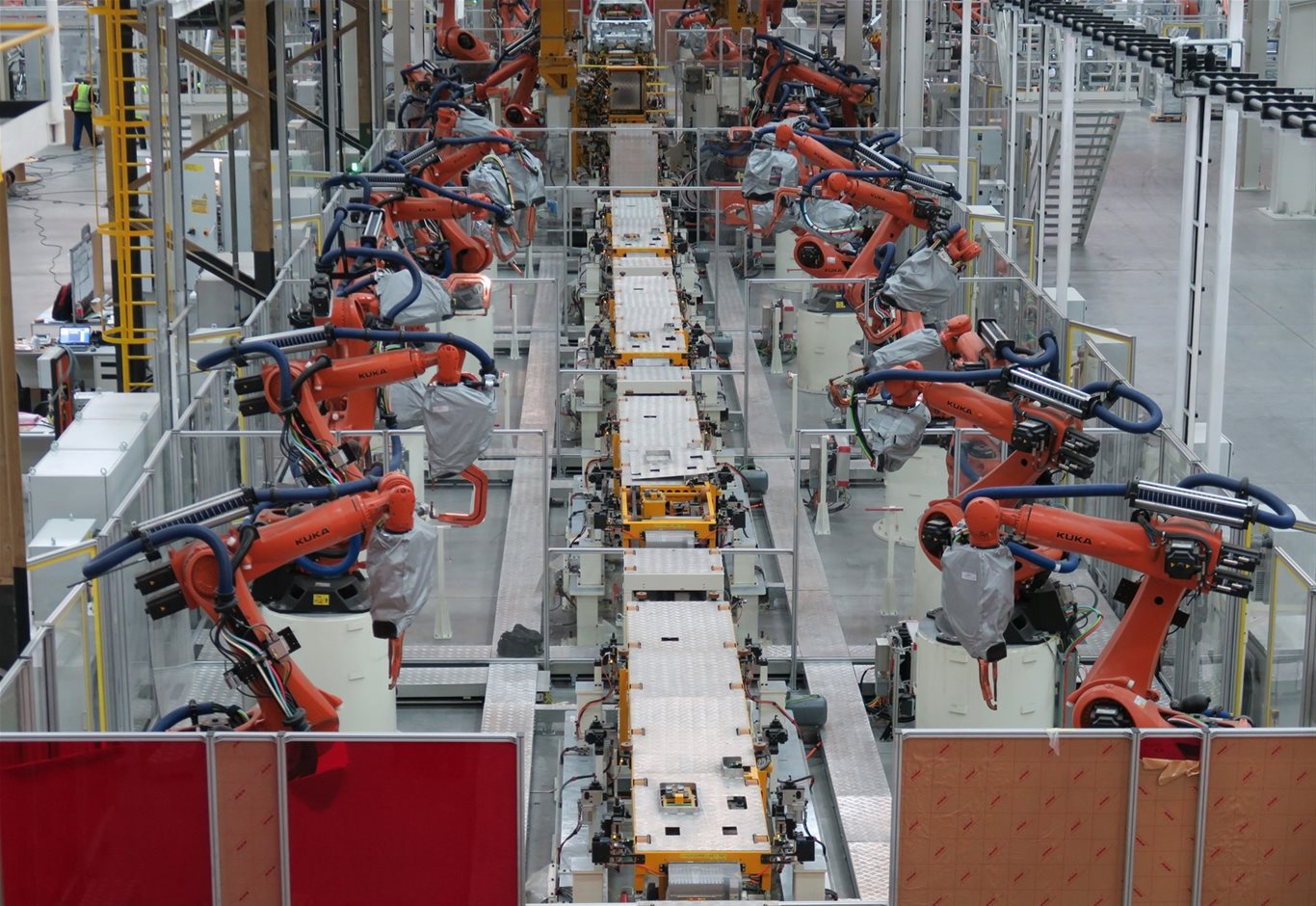
“South Africa has officially launched the IRIS AI Humanoid Tutor manufacturing plant in Durban, designed to integrate humanoid robots into classrooms and support teachers with personalized learning tools. The initiative, led by BSG Technologies, is expected to generate 20,000 jobs over five years while positioning South Africa as a continental hub for robotics innovation.”
The IRIS project is expected to create 20,000 jobs over the next five years, spanning:
- Manufacturing roles at the Dube TradePort facility.
- Technical positions in robotics engineering, AI development, and maintenance.
- Educational support roles as schools integrate IRIS into classrooms.
- Supply chain opportunities for local businesses providing components and services.
By localizing production, South Africa reduces reliance on imports and strengthens its industrial base, positioning itself as a continental hub for robotics innovation.
Educational Transformation
The IRIS AI Humanoid Tutor is tailored to South Africa’s educational challenges:
- Overcrowded classrooms and uneven teacher-to-student ratios.
- Disparities in learning outcomes across urban and rural schools.
- Digital literacy gaps among students.
Key features include:
- Personalized learning support for individual student needs.
- Real-time performance analysis to help teachers identify struggling learners.
- Interactive engagement tools that make lessons more dynamic.
This aligns with the Fourth Industrial Revolution (4IR) agenda, ensuring South Africa’s youth are equipped with critical technological skills.
Political and Strategic Significance
Deputy Minister of Science, Technology and Innovation, Dr. Nomalungelo Gina, emphasized that IRIS embodies South Africa’s commitment to homegrown solutions. Instead of relying solely on imported technologies, the country is producing robotics tailored to its own challenges. This positions South Africa as a global leader in education-focused robotics, while reinforcing sovereignty in technological development.
Broader Context in Robotics
The IRIS launch builds on a growing robotics ecosystem in South Africa:
- The CSIR’s robotics showcase at the Manufacturing Indaba 2026 highlighted automation for industrial resilience.
- Innovators like Mzwandile Zulu are developing robots that speak all 11 official languages, ensuring inclusivity in AI.
- Events like Roboticon 2026 in Pretoria are merging robotics with cultural preservation and education.
Together, these initiatives demonstrate that South Africa is not only adopting robotics but shaping them to meet local needs.
Challenges and Risks
Despite the optimism, challenges remain:
- Ensuring equitable access to robotics in rural schools.
- Addressing teacher training gaps to effectively integrate humanoid tutors.
- Managing public perception to avoid fears of job displacement.
Conclusion
The IRIS AI Humanoid Tutor Plant represents a bold step forward in South Africa’s robotics journey. By combining economic growth, educational transformation, and technological sovereignty, the project sets a precedent for how robotics can be harnessed to solve pressing societal challenges.



