




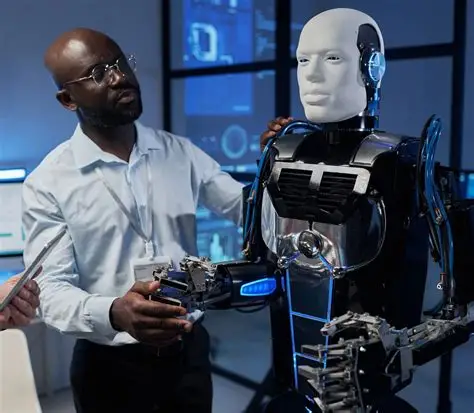
“South Africa has officially launched the IRIS AI Humanoid Tutor manufacturing plant at Dube TradePort in Durban, a project expected to create 20,000 jobs over the next five years. The initiative, backed by the Department of Science, Technology and Innovation, aims to transform education while positioning South Africa as a producer of advanced robotics technologies.”
On August 14, 2026, South Africa took a bold step into the future of robotics and artificial intelligence with the launch of the IRIS AI Humanoid Tutor manufacturing plant at Dube TradePort in Durban. This groundbreaking initiative, spearheaded by BSG and Technologies under the leadership of CEO Thando Gumede, represents not only a technological milestone but also a socio-economic transformation poised to reshape education, industry, and employment in the country.
Background and Context
The IRIS AI Humanoid Tutor is a locally developed innovation designed to support teachers in classrooms by providing personalized learning assistance, performance analysis, and engagement tools. Unlike traditional automation projects that often raise concerns about job displacement, IRIS is explicitly positioned as a complement to human educators, enhancing rather than replacing their role. Deputy Minister of Science, Technology and Innovation, Dr Nomalungelo Gina, emphasized that this project embodies South Africa’s commitment to producing technology tailored to its own challenges rather than relying solely on imports.
Economic Impact
The most striking aspect of the IRIS launch is its potential to create 20,000 jobs over the next five years. This job creation spans multiple sectors:
- Manufacturing roles at the Dube TradePort facility.
- Technical positions in robotics engineering, AI development, and maintenance.
- Educational support roles as schools integrate IRIS into classrooms.
- Supply chain opportunities for local businesses providing components and services.
By localizing production, South Africa reduces dependency on foreign imports, strengthens its industrial base, and positions itself as a hub for robotics-driven innovation in Africa.
Educational Transformation
The IRIS AI Humanoid Tutor is designed to address pressing challenges in South Africa’s education system, including overcrowded classrooms, uneven teacher-to-student ratios, and disparities in learning outcomes. Key features include:
- Personalized learning support tailored to individual student needs.
- Real-time performance analysis to help teachers identify struggling learners.
- Interactive engagement tools that make lessons more dynamic and accessible.
This integration of robotics into education aligns with the broader goals of the Fourth Industrial Revolution (4IR), ensuring that South Africa’s youth are equipped with digital literacy and technological skills critical for the future workforce.
Government and Private Sector Collaboration
The launch of IRIS underscores the importance of collaboration between government and private enterprises. The Department of Science, Technology and Innovation (DSTI) has pledged continued support, while Dube TradePort Corporation has provided world-class infrastructure to enable efficient operations. This partnership reflects a strategic vision: South Africa must not only consume global technologies but also produce innovations that address local realities.
Strategic Importance
The IRIS project is more than an educational tool—it is a symbol of national resilience and innovation. By investing in robotics and AI, South Africa signals its readiness to compete globally in advanced technology sectors. The initiative also strengthens the country’s innovation ecosystem, encouraging enterprise development, industrial capability, and opportunities for young entrepreneurs.
Challenges and Considerations
While the IRIS launch is promising, several challenges remain:
- Cost of deployment: Ensuring affordability for schools across urban and rural areas.
- Training requirements: Teachers must be adequately trained to integrate IRIS into classrooms.
- Public perception: Addressing concerns about over-reliance on technology in education.
- Sustainability: Ensuring long-term funding and support for widespread adoption.
Conclusion
The launch of the IRIS AI Humanoid Tutor manufacturing plant at Dube TradePort marks a watershed moment in South Africa’s robotics journey. By combining technological innovation with socio-economic development, the project promises to create thousands of jobs, transform education, and position South Africa as a leader in robotics within Africa. As Dr Gina aptly noted, the question is not whether South Africa should participate in global technological transformation, but whether it will do so as a consumer or as a producer. With IRIS, the answer is clear: South Africa is stepping forward as a producer of innovation.



