




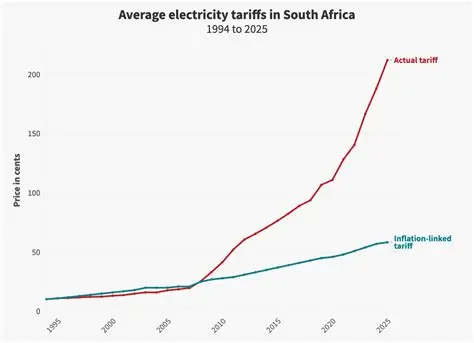
“South African households and businesses are grappling with a 9.01% electricity tariff increase effective 1 July 2026, adding to Eskom’s earlier 8.76% hike in April. The adjustment, driven by regulatory recalculations and court rulings, raises concerns about affordability, economic competitiveness, and the regulator’s ability to balance Eskom’s financial recovery with consumer protection.”
South Africa’s energy sector has once again been thrust into the spotlight as the National Energy Regulator of South Africa (NERSA) approved a 9.01% average electricity tariff increase for municipal customers effective 1 July 2026. This follows Eskom’s direct customer increase of 8.76% in April, marking the second major adjustment in just four months. Together, these hikes represent a cumulative increase of more than 18% over two financial years, raising alarm among consumers, businesses, and energy experts.
Background: Why the Increase Happened
The tariff escalation stems from a court-ordered recalculation of Eskom’s Regulated Asset Base (RAB). In late 2025, a High Court rejected a closed-door settlement between Eskom and NERSA, demanding public consultation. This process revealed a R76 billion shortfall, largely due to depreciation miscalculations and asset return errors. NERSA’s final decision required Eskom to recover R12 billion in the 2026/27 financial year alone, pushing tariffs higher than originally projected.
Regional Impact
- Cape Town: Lowest increase at 7.5%.
- Buffalo City (East London): Highest increase at 14%.
- National Average: 9.01% for municipal customers.
This uneven distribution highlights the disparities in municipal energy management and the challenges of balancing affordability across regions.
Economic Consequences
Energy experts warn that continuous tariff hikes risk straining household budgets and undermining business competitiveness. With electricity costs already exceeding R3 per kWh in most metros and surpassing R4 in the priciest areas, South Africa’s energy affordability crisis is deepening.
Consumer Burden
For a typical household:
- R1,500 bill → +R135 per month (+R1,620 per year).
- R2,000 bill → +R180 per month (+R2,160 per year).
- R2,500 bill → +R225 per month (+R2,700 per year).
These figures illustrate how tariff increases translate into tangible financial strain for ordinary South Africans.
Expert Opinions
Matthew Cruise of IMPOWER Solar criticized the regulator’s handling of depreciation calculations, warning that “after 15 years of price determinations, the regulator and the utility are still in dispute over fundamental accounting principles.”
Alternatives and Solutions
Energy analysts emphasize the importance of renewable energy adoption and household efficiency measures:
- Solar installations: Fix electricity rates long-term.
- Geyser blankets & timers: Reduce consumption by 30–40%.
- Battery storage systems: Provide resilience against future tariff shocks.
Political and Social Implications
The tariff hikes are likely to fuel public dissatisfaction and political debate, especially as South Africans continue to recover from years of load shedding and economic stagnation. While Eskom has suspended load shedding since May 2025, the financial burden of keeping the grid stable is now being shifted onto consumers.
Conclusion
The July 2026 tariff increase underscores the fragile balance between Eskom’s financial recovery and consumer affordability. With cumulative increases exceeding 18% in two years, South Africa faces a critical juncture: either accelerate the transition to affordable renewable energy or risk deepening economic inequality and public unrest.



