




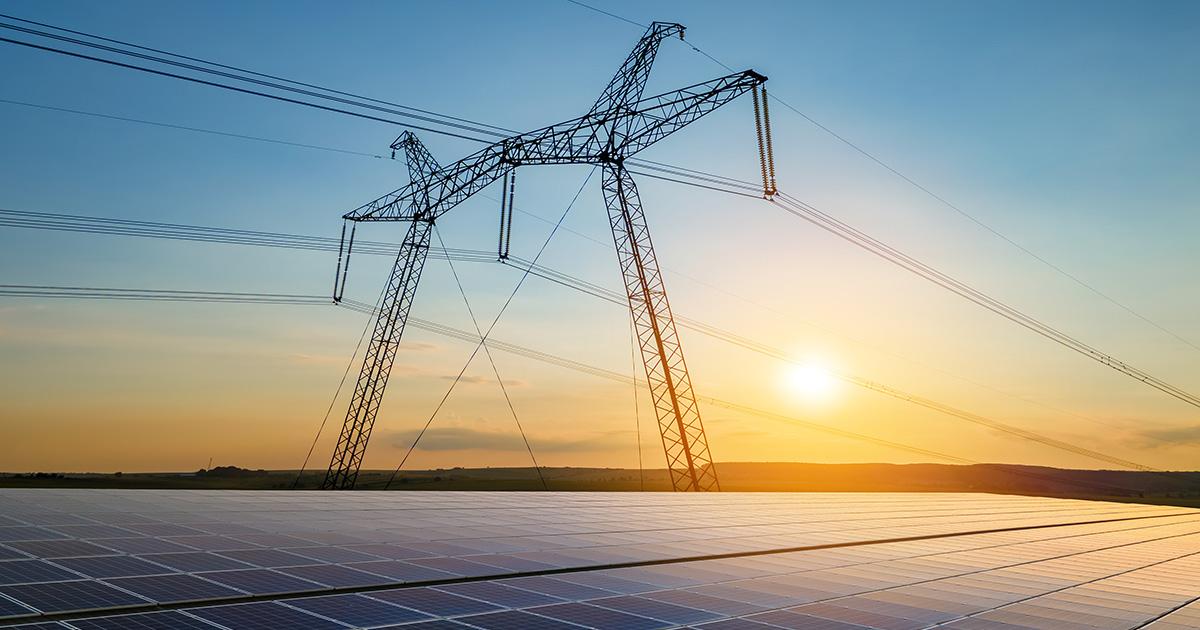
“EPIX, a joint venture between Energy Partners and Investec, is expanding competition in South Africa’s electricity market by connecting renewable-energy generators with commercial and industrial customers. The company plans to offer tailored electricity supply arrangements, initially using existing generation facilities and grid wheeling, while expanding its portfolio towards additional renewable sources and potential regional trading.”
EPIX’s Entry Signals a New Phase for South Africa’s Competitive Electricity Market
A changing electricity landscape
South Africa’s electricity sector is moving beyond a system dominated by a single major utility towards a more diversified market in which private generators, licensed traders and large electricity consumers can enter into increasingly flexible supply arrangements. The arrival of EPIX as an independent electricity trading platform is a significant development in this transition, offering businesses another potential route to renewable electricity procurement.
According to a report published by Fullview on 27 October 2026, EPIX began operations in August after the National Energy Regulator of South Africa (NERSA) approved the transfer of Investec’s electricity trading licence to the joint venture platform in June. The business is equally owned by Energy Partners and Investec, combining their respective capabilities in energy solutions, financing and customer relationships.
The development comes as companies across South Africa seek greater control over electricity costs, supply reliability and environmental performance. For industries that consume substantial amounts of power, electricity procurement has become a strategic business decision rather than simply a routine monthly expense.
Mining operations, manufacturers, logistics companies, retailers and property businesses must balance the cost of energy against production requirements, customer commitments and long-term investment plans. Consequently, new electricity trading arrangements could become increasingly important in how businesses manage their operations.
How EPIX intends to operate
EPIX is designed to connect electricity generators with businesses that need reliable, commercially suitable power supplies. Rather than requiring every customer to negotiate separately with an individual power producer, the platform aims to coordinate electricity sourcing and supply through a single trading relationship.
The company intends to analyse customers’ electricity consumption patterns, commercial objectives and sustainability requirements before developing appropriate supply strategies. These arrangements may allow customers to access electricity generated by renewable projects without having to build and operate every generation asset themselves.
This approach could be particularly attractive to businesses that want to increase their renewable electricity consumption but lack the capital, technical expertise or available land required to develop large solar or wind facilities on their own premises.
Investec contributes financing capabilities, market relationships and experience in sourcing large-scale renewable generation. Energy Partners adds technical expertise and established relationships with commercial and industrial energy users. Together, the partners aim to link generation capacity, funding and electricity demand through a dedicated trading platform.
However, the precise financial benefits will depend on individual contracts, electricity consumption patterns, network charges and the prices available from competing suppliers. Businesses should therefore assess proposed agreements against their existing electricity costs rather than assuming that private procurement will automatically be cheaper.
Electricity wheeling opens additional opportunities
One of the central mechanisms supporting this model is electricity wheeling.
Wheeling enables electricity generated at one location to be delivered to a customer at another location through an existing transmission or distribution network. For example, a solar farm in the Free State can supply electricity to a business in Gauteng, subject to the necessary agreements, network arrangements and regulatory requirements.
This allows companies to access generation resources that would otherwise be geographically distant from their facilities. It also creates opportunities for renewable-energy developers to sell electricity to customers beyond their immediate surroundings.
Wheeling does not mean electricity travels directly from a particular solar panel to an individual factory through a dedicated physical connection. Instead, the grid facilitates the delivery and accounting of electricity under the applicable commercial and technical arrangements.
Network access, transmission capacity, distribution constraints and the costs of using the electricity system remain important considerations. A generator may have sufficient solar capacity but still face limitations on how much electricity can be delivered to particular customers at certain times.
EPIX’s trading model therefore depends not only on identifying affordable renewable generation but also on arranging suitable network access and commercially viable supply contracts.
South Africa’s electricity market reforms are creating more opportunities for these arrangements. Investec previously received an electricity trading licence from NERSA, enabling it to broaden its energy services and participate in electricity procurement and trading.
The transfer of that licence to the EPIX joint venture represents a further organisational development within this evolving market.
Renewable electricity for industrial customers
Commercial and industrial users are likely to be an important market for EPIX because electricity represents a significant operating requirement for many of these businesses.
Mining companies need power for extraction, processing, ventilation and material handling. Manufacturers depend on electricity to operate production lines and maintain output. Cold-storage facilities, food processors and distribution centres require dependable energy for refrigeration, equipment and logistics.
For these customers, an electricity procurement strategy must consider more than the headline price per kilowatt-hour. It must also account for supply profiles, demand charges, contract duration, price adjustment mechanisms and the consequences of insufficient electricity availability.
Renewable electricity contracts can help businesses diversify their energy sources and manage exposure to changing electricity prices. They may also support corporate emissions-reduction commitments and environmental reporting requirements.
Nevertheless, renewable generation is variable. Solar output depends on daylight and weather, while wind generation depends on prevailing wind conditions. A customer whose operations run throughout the night may therefore need a supply arrangement that combines different generation sources, storage, grid electricity or other balancing mechanisms.
EPIX says it intends to build a broader renewable supply portfolio over time. The company has indicated that wind, hydroelectricity and battery storage could complement solar generation as its offering develops.
A more diversified portfolio could help align electricity supply with customer demand, although the effectiveness of this approach will depend on the capacity secured, the availability of generation and the ability to deliver power through the grid.
Early trading activity and future expansion
The Fullview report states that EPIX’s first generation facility commenced trading on 15 August 2026, with a second facility expected to come online subsequently. These developments represent the beginning of its operational portfolio rather than evidence that the company has already reached its intended long-term scale.
The company’s initial approach is to procure electricity from its generation facilities and wheel it to customers across sectors such as mining, food and beverages, manufacturing, logistics, retail and property.
Its ability to attract additional customers will depend on whether it can offer commercially competitive contracts, demonstrate dependable supply arrangements and manage the risks associated with electricity procurement.
For independent power producers, licensed traders can provide an additional route to market. Developers need buyers who can enter into viable electricity purchase agreements, while lenders generally require confidence that projects will generate sufficient revenue to repay their financing.
An electricity trading platform can help bring these parties together by aggregating customer demand and coordinating supply arrangements. This may broaden the pool of potential buyers for renewable projects and support further private-sector investment.
However, the existence of a trader does not automatically guarantee that every proposed generation project will receive financing or reach construction. Projects still require appropriate permits, grid access, commercial agreements and funding.
EPIX also intends to explore opportunities beyond South Africa, including potential participation in the Southern African Power Pool. The company has indicated that it plans to apply for the necessary licence to wheel electricity to customers connected across the regional network.
That ambition could eventually connect South African commercial customers with a wider regional electricity market. Nevertheless, cross-border trading requires additional regulatory approvals, transmission arrangements and coordination between the relevant electricity systems. Regional expansion should therefore be understood as a stated intention rather than an already completed development.
Competition, affordability and consumer choice
The entry of additional electricity traders could gradually change how large customers negotiate their energy contracts.
In a market with more suppliers and procurement options, businesses may be able to compare different combinations of renewable generation, supply duration, pricing structures and risk allocation. Traders may also compete through customer service, energy management, billing support and the ability to coordinate multiple sources.
These benefits will not necessarily reach every electricity consumer equally. EPIX’s announced focus is on commercial and industrial customers, not a universal household electricity supply service.
Households supplied through municipal distributors or Eskom will continue to depend on the applicable retail electricity arrangements unless those arrangements change. Any eventual wider consumer benefits would depend on how competition affects generation investment, system costs and electricity prices throughout the market.
Regulation will remain important as private trading expands. NERSA’s licensing and oversight responsibilities help establish the conditions under which market participants can buy and sell electricity. Network operators must also maintain system security while managing the technical requirements of a more diverse set of generators and buyers.
For electricity traders, regulatory compliance, transparent contracts and accurate settlement of electricity transactions will be essential to building customer confidence.
Implications for South Africa’s energy transition
EPIX’s entry illustrates how private-sector participation is becoming part of South Africa’s broader energy transition.
Renewable generation projects require long-term buyers, while industrial customers increasingly want flexible ways to procure electricity. Trading platforms can provide an intermediary between these needs, potentially helping capital flow towards new generation and making renewable electricity accessible to businesses that cannot develop their own facilities.
The model also highlights an important distinction: adding generation capacity is only one part of creating a reliable electricity system. Electricity must be delivered when customers need it, through networks capable of transporting power from generating facilities to areas of demand.
Storage, transmission investment, forecasting and flexible supply arrangements will all influence the value of renewable electricity. In this respect, electricity traders can contribute to the commercial coordination of the market, but they cannot independently resolve infrastructure bottlenecks or eliminate the need for adequate system capacity.
South Africa’s progress will depend on cooperation among government, regulators, utilities, private generators, traders, financiers and customers. Clear rules and efficient network access will be particularly important as more businesses consider purchasing electricity outside traditional supply arrangements.
What happens next?
The immediate test for EPIX will be whether it can convert its initial operating position into a growing portfolio of generation sources and customers.
The company will need to demonstrate that its supply arrangements are dependable, its contracts are competitive and its portfolio can accommodate customers with different electricity consumption patterns. The anticipated addition of further generation facilities and its stated interest in diversifying into wind, hydro and battery storage will be important developments to watch.
Potential regional expansion could provide additional opportunities, but it will require the appropriate regulatory and transmission arrangements.
For businesses considering private electricity procurement, the emergence of another trading platform reinforces the importance of comparing multiple supply options, examining contract terms and understanding the complete cost of delivered electricity.
Conclusion
EPIX’s entry into South Africa’s electricity market is a meaningful development in the growth of private electricity trading and renewable-energy procurement. By combining Investec’s financing and market capabilities with Energy Partners’ energy-management expertise, the joint venture aims to connect generators and commercial customers through flexible electricity supply arrangements.
Its long-term importance will depend on execution: securing viable generation, attracting customers, navigating grid constraints and offering demonstrable commercial value. If these elements come together, EPIX could help broaden electricity procurement choices for South African businesses and contribute to the country’s continuing transition towards a more competitive and diversified power market.
Editorial note: This is an integrated, independently written article based on the cited reporting, not a verbatim reproduction. Statements about future expansion are attributed to the company and should not be interpreted as completed projects



