




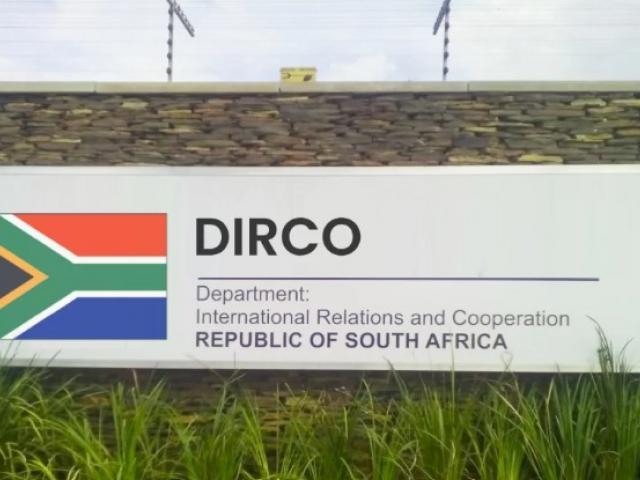
“South Africa is investigating reports that a pilot believed to be a South African national has been captured in the conflict-affected eastern Democratic Republic of Congo (DRC), following reports that an aircraft was shot down in South Kivu. The Department of International Relations and Cooperation (DIRCO) says it is working through diplomatic and relevant government channels to establish the individual’s nationality and circumstances, while reiterating that South African law prohibits nationals from participating in mercenary activities in armed conflicts abroad.”
South Africa’s diplomatic responsibilities in the DRC
South Africa’s international relations have come into focus following reports that a pilot believed to be a South African national has been captured in the eastern Democratic Republic of Congo (DRC). The reported incident has attracted attention because it involves a South African citizen, an ongoing regional conflict and the government’s responsibility to establish the facts while respecting international law and diplomatic procedures.
The incident was reported on 26 November 2026 by South African media outlets. According to the reports, the individual is believed to be a Cape Town-based pilot who was allegedly involved in aviation activities in the conflict-affected eastern DRC. Reports also indicate that an aircraft was shot down in the South Kivu region and that the pilot survived before being taken into custody by armed elements. These details have not all been independently established by South African authorities.
The South African government, through DIRCO, has acknowledged receiving reports of the alleged capture. However, the department has emphasised that the individual’s nationality and the circumstances surrounding the incident still need to be verified. This distinction is important because early information emerging from an active conflict zone can be incomplete, disputed or difficult to authenticate.
The government’s response therefore centres on establishing reliable information before making definitive public statements.
DIRCO’s response and diplomatic engagement
DIRCO plays a central role in coordinating South Africa’s diplomatic response to incidents involving South African nationals abroad. Its responsibilities include communicating with foreign governments, engaging relevant diplomatic missions and coordinating with other state institutions where necessary.
In this case, the department has indicated that the South African government is taking steps through appropriate authorities and diplomatic channels to determine what happened.
The department’s position demonstrates the importance of diplomatic engagement when a South African national is reportedly involved in an incident outside the country’s borders. South Africa cannot independently exercise police or judicial authority within the DRC. Instead, it must work through the country’s recognised institutions and applicable international arrangements.
The government must also establish whether the individual is a South African citizen, what activities he was undertaking and which authorities or armed groups may have information about his situation.
These questions are particularly important because the eastern DRC has experienced prolonged insecurity involving armed groups, military operations and competing political and security interests.
According to the South African government’s official statement, its immediate priority is verification and engagement through the appropriate channels.
The conflict in eastern Democratic Republic of Congo
The eastern DRC has experienced years of instability, particularly in provinces such as North Kivu and South Kivu. Armed confrontations, displacement, insecurity and competition over territory and resources have complicated efforts to establish lasting peace.
The conflict has also attracted regional and international attention because of its implications for neighbouring countries, cross-border security and humanitarian conditions.
The presence of different armed groups creates serious risks for civilians, humanitarian organisations, commercial operators and individuals working in aviation and other specialised sectors.
Aviation is particularly important in conflict-affected areas because aircraft can support humanitarian operations, transportation, logistical activities and other services. However, aircraft operating in insecure areas may face significant threats, including attacks, restricted access and rapidly changing security conditions.
The reported incident involving the South African pilot therefore raises questions about the circumstances under which the aircraft was operating and the nature of the activities being undertaken.
At this stage, the available reports do not establish all the operational details. Consequently, it would be premature to draw conclusions about the individual’s responsibilities or the precise circumstances of the reported aircraft incident.
South African law and mercenary activities
One of the most important aspects of the government’s response concerns South African legislation regulating mercenary activities and certain activities in countries experiencing armed conflict.
The Prohibition of Mercenary Activities and Regulation of Certain Activities in Country of Armed Conflict Act, 2006, establishes restrictions relating to mercenary activities and regulates certain forms of assistance in armed conflicts abroad.
South Africa’s government has reiterated that its nationals are prohibited from engaging in mercenary activities in foreign armed conflicts.
This legal position is significant because international conflicts increasingly involve private military contractors, foreign fighters, security personnel and individuals recruited to perform specialised functions.
However, the legal classification of an individual’s activities depends on the relevant facts and applicable legislation. Employment as a pilot, for example, does not by itself establish participation in mercenary activity.
Authorities would need to investigate the person’s contractual arrangements, duties, employer, operational responsibilities and the purpose of the activities being undertaken.
The distinction matters because legal responsibility must be determined through evidence and appropriate legal procedures rather than assumptions based on a person’s occupation or presence in a conflict zone.
South Africa’s position reflects its broader interest in preventing nationals from becoming involved in unlawful foreign military activities and ensuring that its laws are respected beyond its borders.
Implications for South Africa’s foreign policy
The reported capture presents South Africa with several diplomatic responsibilities.
First, the government must establish the individual’s identity and nationality. This is essential before it can determine the appropriate consular or diplomatic assistance.
Second, South African authorities need to establish the circumstances surrounding the reported capture. This includes identifying relevant institutions and determining whether the individual is being held by an armed group or another authority.
Third, the government must assess what diplomatic channels are available to obtain reliable information and protect the individual’s rights.
These responsibilities must be approached carefully because the DRC’s eastern conflict environment is politically and militarily sensitive.
South Africa has consistently supported peaceful solutions to conflicts on the African continent. Its foreign policy also places considerable emphasis on regional cooperation, multilateral diplomacy and the role of African institutions in addressing security challenges.
The reported incident therefore provides another example of how domestic legal responsibilities and international diplomatic priorities can intersect.
The government must protect the interests of its nationals while ensuring that its actions remain consistent with international law and the DRC’s sovereignty.
The role of regional diplomacy
The DRC conflict is not solely a domestic security issue. Its consequences extend across the Great Lakes region and affect regional relations, humanitarian cooperation and economic stability.
South Africa’s diplomatic approach must therefore consider the wider regional environment.
Regional organisations, including the Southern African Development Community (SADC) and the African Union (AU), have important roles in promoting dialogue, cooperation and peaceful conflict resolution.
South Africa’s engagement with these institutions is particularly relevant given its position in regional diplomacy and its broader commitment to African-led approaches to peace and security.
The country’s diplomatic representatives must also maintain communication with relevant governments and regional partners to ensure that information concerning the reported incident is handled responsibly.
Any effort to resolve the situation should take account of the security conditions in the affected area and the practical limitations facing diplomatic personnel.
Human rights and the protection of individuals
Another important consideration is the treatment of anyone reportedly held in connection with the incident.
International humanitarian law establishes protections for individuals affected by armed conflict. The specific protections applicable to a person depend on their status and the circumstances of their involvement.
South Africa’s government has an interest in ensuring that any South African national involved in the incident receives treatment consistent with applicable legal protections.
This includes the importance of establishing the person’s whereabouts, ensuring access to appropriate assistance where legally possible and obtaining reliable information about their condition.
At the same time, the government must avoid making assumptions about the individual’s legal status or activities before the investigation has established the relevant facts.
Diplomatic engagement can provide an important channel for communicating these concerns to relevant authorities.
Economic and security considerations
The instability in eastern DRC also has implications for regional economic development.
The DRC possesses significant mineral resources and occupies an important position in African regional trade and investment networks. However, insecurity can disrupt transportation, discourage investment and undermine economic activity.
Conflict also increases the risks facing businesses, logistics companies and workers operating in affected areas.
For South Africa, which maintains commercial and diplomatic interests across the African continent, regional stability is important for trade, investment and economic cooperation.
The reported incident reinforces the importance of reliable security assessments for individuals and organisations operating in conflict-affected countries.
It also highlights why governments must ensure that their citizens understand the legal and security implications of undertaking work in countries experiencing armed conflict.
What happens next?
The immediate priority remains verification.
South African authorities need to establish whether the reported individual is a South African citizen, confirm the circumstances of the aircraft incident and determine who is responsible for holding the pilot, if the reported capture is confirmed.
Further diplomatic engagement may be necessary once the government has established reliable information.
Any subsequent government announcement will be important in clarifying whether the individual requires consular assistance, whether an investigation is under way and what steps can legally be taken.
For now, the government has not established all the details necessary to provide a definitive account of the incident.
The situation illustrates the complex responsibilities facing South Africa when its nationals are reportedly caught up in international conflicts. These responsibilities include protecting citizens, enforcing domestic law, respecting the sovereignty of other states and supporting peaceful regional relations.
Conclusion
The reported capture of a pilot believed to be South African in eastern DRC has placed international relations, regional security and the country’s foreign-conflict legislation under renewed attention.
DIRCO’s response highlights the importance of verification and diplomatic engagement before definitive conclusions are reached. The incident also reinforces South Africa’s stated opposition to mercenary activities by its nationals and its continuing support for peaceful solutions to conflicts in Africa.
The next developments will depend on information established by the relevant authorities and the outcome of diplomatic efforts to clarify the individual’s identity and circumstances.
For South Africa, the central challenge is to protect its legitimate interests and uphold the law while engaging responsibly with a complex and unstable regional security environment.



