




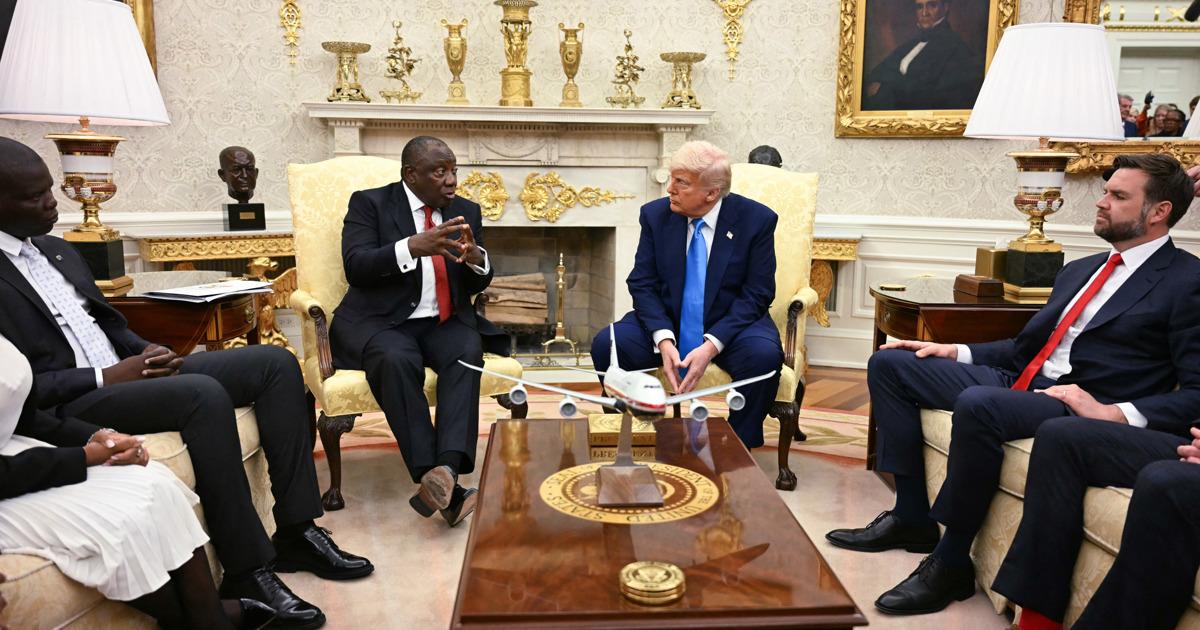
“South Africa is considering whether the Democrats’ takeover of both chambers of the United States Congress could create an opportunity to rebuild strained diplomatic relations and challenge Washington’s decision to withdraw South Africa’s African Growth and Opportunity Act (AGOA) benefits from January 2027. President Cyril Ramaphosa and South African diplomatic officials see potential opportunities for renewed engagement, although President Donald Trump retains considerable authority over foreign policy and trade decisions.”
South Africa Sees Diplomatic Opening After US Democratic Congressional Victory as Relations with Washington Remain Strained
South Africa’s international relations landscape has entered a potentially significant new phase following the Democratic Party’s victory in the United States congressional elections, creating fresh possibilities for diplomatic engagement between Pretoria and Washington. However, despite renewed optimism among South African political leaders and international relations specialists, the country’s relationship with the United States remains complicated by disagreements over trade, foreign policy, sovereignty and international cooperation.
The congressional election results have attracted considerable attention in South Africa because they arrive at a particularly difficult moment in bilateral relations. Washington recently announced its intention to withdraw South Africa’s preferential access to the American market under the African Growth and Opportunity Act (AGOA), effective January 1, 2027. The decision represents another significant setback in a relationship that has experienced mounting tensions since President Donald Trump returned to the White House.
Nevertheless, South African President Cyril Ramaphosa believes the Democratic victory could help establish a new international environment and potentially create opportunities to improve diplomatic relations.
Democratic Victory Creates New Diplomatic Possibilities
The Democratic Party’s victory in the November 3 congressional elections significantly changed the political balance in Washington. Democrats secured control of both the House of Representatives and the Senate, creating a more complicated political environment for the Trump administration during the remaining congressional term.
According to reporting by Daily Maverick on November 6, the Democratic victory has generated renewed optimism among South African officials and political observers who believe the congressional changes could create opportunities for Pretoria to rebuild relations with Washington.
President Ramaphosa has publicly welcomed the developments, suggesting that the results could introduce a new era in international relations.
Speaking earlier in the week, Ramaphosa expressed hope that the political changes would encourage improved cooperation between the two countries in areas including geopolitics, trade and investment.
The South African president’s optimism reflects the importance Pretoria attaches to maintaining constructive relations with the United States, one of its significant economic and diplomatic partners.
However, the congressional victory does not automatically translate into a complete reversal of American foreign policy. President Trump retains considerable executive authority, particularly in areas involving diplomacy, national security and trade decisions.
Consequently, South Africa’s diplomatic strategy will require careful engagement with both Congress and the White House.
AGOA Withdrawal Remains the Central Diplomatic Challenge
The most immediate concern in South Africa’s relationship with Washington remains the announced withdrawal of AGOA benefits.
On November 2, the South African government confirmed that the United States had issued 60 days’ advance notice of its intention to withdraw South Africa’s participation in the programme from January 1, 2027.
AGOA has historically provided eligible African countries with preferential access to the American market. South Africa has been among its largest beneficiaries, exporting products including automotive components, agricultural goods and manufactured products.
The South African government has expressed disappointment with the decision, arguing that it had made substantial efforts to address American concerns through negotiations and additional trade concessions.
According to the Department of Trade, Industry and Competition, South Africa exported approximately $1.7 billion worth of goods to the United States under AGOA in 2025.
Although these exports represented approximately 1% of South Africa’s total global exports, the programme remains important for specific industries and employment opportunities.
The government has warned that the consequences could affect workers, businesses and communities connected to export-oriented manufacturing and agriculture.
Pretoria has also emphasised that AGOA does not represent the entirety of its economic relationship with Washington.
Bilateral trade between South Africa and the United States reached approximately $28.8 billion in 2025, while hundreds of American companies operate within the South African economy.
The government maintains that these economic relationships provide a foundation for continued cooperation even if preferential trade arrangements are discontinued.
Congress Could Provide South Africa with Greater Diplomatic Access
The Democratic victory has nevertheless created an opportunity for South Africa to strengthen its engagement with influential congressional committees.
Daily Maverick reported on November 6 that Democratic lawmakers had criticised the Trump administration’s decision to remove South Africa from AGOA.
Senior Democratic representatives expressed concern that the decision could undermine American strategic interests and potentially strengthen China’s position in Africa.
These developments could provide Pretoria with additional diplomatic channels through which it can explain its foreign policy positions and seek reconsideration of American decisions.
South African Deputy Minister of Trade, Industry and Competition John Steenhuisen has suggested that the congressional changes could provide opportunities for improved engagement with lawmakers who may be more sympathetic towards South Africa.
The shift in congressional leadership could also affect discussions concerning international trade, bilateral investment and the future of American economic engagement with Africa.
However, congressional support alone may not be sufficient to reverse the AGOA decision.
The programme was established through legislation, but eligibility decisions involve significant presidential authority.
Therefore, South Africa’s diplomatic efforts would need to combine engagement with congressional representatives, trade officials and the executive branch.
Sovereignty and Foreign Policy Differences Continue to Complicate Relations
Beyond trade, the relationship between South Africa and the United States has become increasingly complicated by disagreements over foreign policy.
The South African government has consistently defended its independent foreign policy approach, emphasising sovereignty, international law and multilateral cooperation.
Pretoria’s positions on international conflicts, including its legal proceedings against Israel at the International Court of Justice, have contributed to tensions with Washington.
South Africa has also maintained diplomatic relationships with countries whose geopolitical positions differ from those of the United States.
These relationships have become subjects of criticism from American officials and political representatives.
South African International Relations and Cooperation Minister Ronald Lamola previously described relations between Pretoria and Washington as having reached a critically low point.
He argued that disagreements concerning domestic legislation, transformation policies and foreign affairs should not result in external interference in South Africa’s constitutional responsibilities.
The government maintains that its foreign policy decisions are determined independently and in accordance with constitutional principles.
This position reflects South Africa’s broader diplomatic philosophy, which emphasises the importance of maintaining strategic autonomy while participating actively in international institutions.
South Africa Faces Pressure to Strengthen Economic Diplomacy
The developments have also intensified domestic discussions concerning the effectiveness of South Africa’s diplomatic strategy.
Political parties and business organisations have expressed differing opinions about the causes of deteriorating relations with Washington.
The Democratic Alliance has criticised the government’s foreign policy approach, arguing that diplomatic disagreements and ideological positions have contributed to the loss of preferential trade access.
The African National Congress, meanwhile, has rejected suggestions that South Africa should abandon its transformation policies or surrender its foreign policy independence to secure economic benefits.
These disagreements demonstrate how international relations have become increasingly connected to domestic political debates.
Nevertheless, several economic analysts have warned that the country must prioritise practical diplomatic engagement rather than allowing political disagreements to prevent negotiations.
South African exporters and manufacturers remain particularly concerned about the implications of the AGOA decision.
The automotive industry, citrus producers, wine exporters and other agricultural businesses could face additional costs when accessing American markets.
Consequently, government officials have emphasised the importance of protecting affected industries while pursuing negotiations with Washington.
Diplomatic Engagement and Market Diversification Become Strategic Priorities
South Africa’s response to the American decision is increasingly focused on two parallel strategies: maintaining engagement with Washington and expanding economic partnerships elsewhere.
The government has indicated that it will continue pursuing trade and investment opportunities across Africa, Asia, Europe and Latin America.
The African Continental Free Trade Area offers opportunities for greater regional economic integration, while relationships with China, India and the European Union remain important components of South Africa’s international economic strategy.
These efforts reflect Pretoria’s recognition that dependence on a limited number of markets can expose exporters to political and economic uncertainty.
At the same time, South African officials continue to regard the United States as an important trading partner.
The government has therefore indicated that it remains open to negotiations concerning a more comprehensive bilateral trade arrangement.
President Ramaphosa has also suggested that strengthening direct bilateral engagement could provide a pathway towards improved economic cooperation.
Such negotiations would require both countries to identify areas of mutual interest while addressing disagreements that have complicated their relationship.
International Relations Implications for South Africa
The current diplomatic developments could have consequences extending beyond the immediate relationship between Pretoria and Washington.
South Africa occupies an influential position within the African continent and participates actively in multilateral organisations, including BRICS, the African Union and the United Nations.
Its relationship with the United States therefore has implications for broader international cooperation, regional diplomacy and economic development.
Improved relations could strengthen cooperation in areas including investment, critical minerals, infrastructure development, energy and global governance.
Conversely, prolonged diplomatic tensions could complicate South Africa’s efforts to attract investment and maintain constructive relationships with Western economies.
The congressional election results provide an opportunity to reconsider diplomatic strategies, but they do not eliminate the underlying disagreements.
The coming weeks will therefore be particularly important as South Africa attempts to engage American political institutions before the announced AGOA withdrawal takes effect.
Conclusion: Opportunity Exists, but Diplomatic Success Remains Uncertain
South Africa’s international relations with the United States are entering a period of uncertainty accompanied by renewed diplomatic possibilities.
The Democratic victory in Congress has created opportunities for engagement and potentially improved political support for South Africa’s position.
However, the Trump administration retains substantial authority over foreign policy and trade decisions, meaning Pretoria cannot rely exclusively on congressional changes to resolve its difficulties.
The government’s immediate priorities include strengthening diplomatic engagement, protecting affected industries, expanding export markets and pursuing a more stable bilateral relationship.
Ultimately, the outcome will depend on whether both countries can identify practical solutions to their disagreements while respecting their respective national interests.
For South Africa, the challenge is to preserve diplomatic independence while maintaining constructive international partnerships.
For Washington, the challenge is to balance political disagreements with the strategic and economic benefits of cooperation with an influential African partner.
The congressional election results may have opened a new diplomatic window, but whether that opportunity produces meaningful improvements in South Africa-US relations remains to be seen.



