




“South African basketball has been drawn into a dispute over the country’s representative for the 2027 Road to BAL qualifiers, with the Basketball National League supporting the Soweto Panthers after their league triumph, while Basketball South Africa maintains that the Johannesburg Giants earned the place through the national club championships. The disagreement has raised questions about competition recognition, governance, transparency and the process for confirming South African clubs for continental competition.”
South African Basketball at a Crossroads as Road to BAL 2027 Representation Dispute Intensifies
South African basketball faces an important test of its governance and competitive credibility following a disagreement over which club should represent the country in the 2027 Road to the Basketball Africa League (BAL) qualifiers. The dispute centres on the Soweto Panthers and Johannesburg Giants, two clubs whose respective competition achievements have placed them at the heart of a wider disagreement involving Basketball South Africa (BSA), the Basketball National League (BNL) and FIBA Africa.
The controversy has attracted attention because the Road to BAL provides African clubs with an opportunity to compete for a place in one of the continent’s leading professional basketball competitions. Consequently, uncertainty over South Africa’s representative could affect preparations, sponsorship opportunities, players’ ambitions and confidence in the country’s basketball administration.
According to reporting by EWN Sport on 19 October 2026, BSA rejected the selection of the Soweto Panthers, maintaining that the Johannesburg Giants were the legitimate national champions and the club officially submitted by the federation for continental qualification. Meanwhile, the BNL announced that the Panthers had been confirmed by FIBA Africa following their success in the 2026 Basketball National League season.
Two clubs, two different championship pathways
The disagreement stems partly from the existence of separate competition structures within South African basketball. The Johannesburg Giants secured the Basketball South Africa National Club Championships, while the Soweto Panthers won the Basketball National League competition.
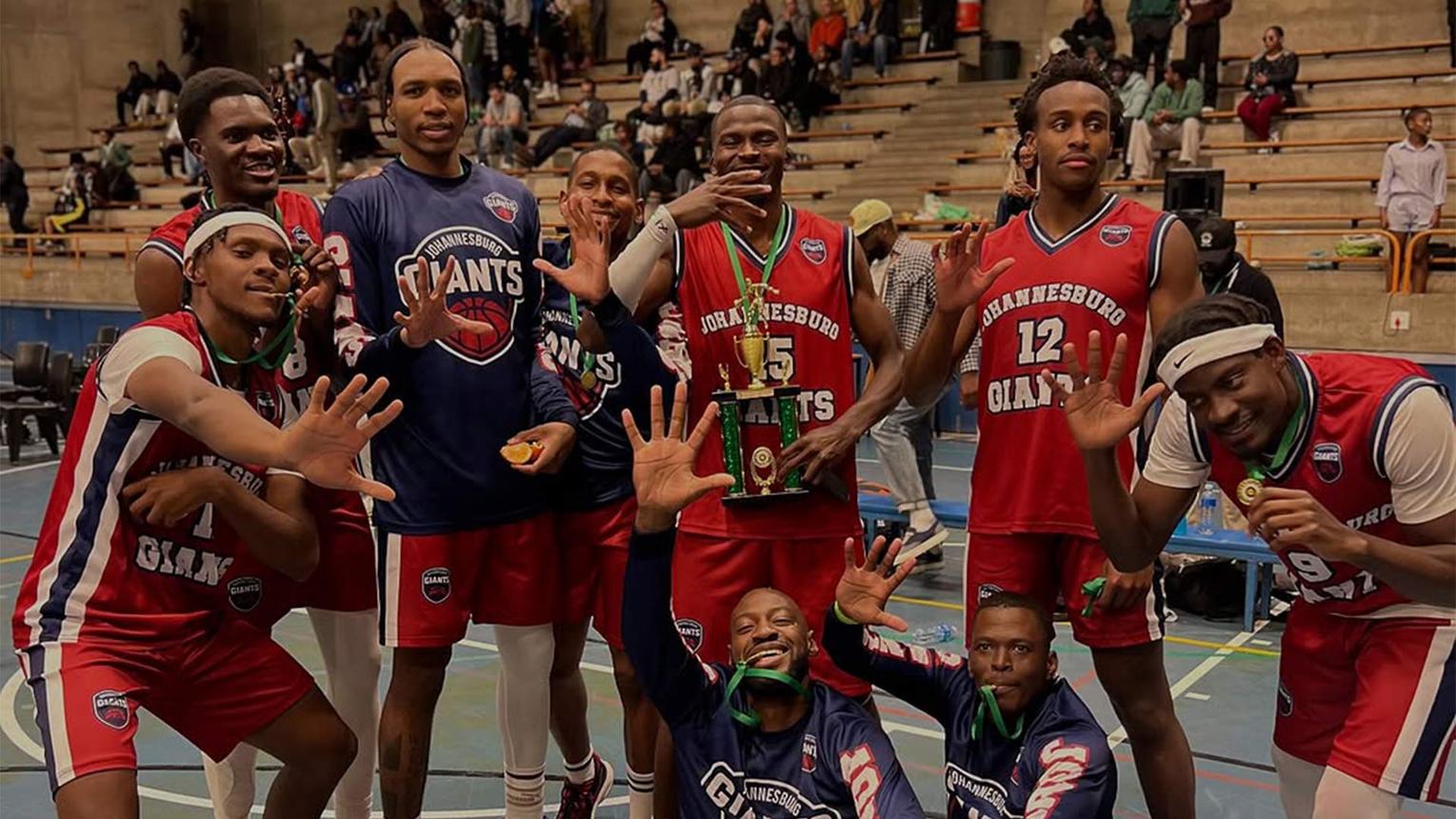
The Giants strengthened their claim by delivering an impressive performance at the national club championships held at the Mandeville Indoor Sport Center in Johannesburg. They finished the tournament with a perfect 4–0 record and defeated MBB 99–57 in their final game on 11 October 2026.
The victory secured the Giants’ second consecutive national club championship. Their performance demonstrated a combination of scoring ability, defensive discipline and team coordination, reinforcing their position among the country’s leading basketball clubs.
Several players contributed significantly to the Giants’ championship success. Dylan Whitbread scored 20 points in the decisive game, including four three-pointers, while Joshua Ozabor contributed 19 points. Championship Most Valuable Player Aviwe Mahlong added 15 points, and Yanick Kasilembo scored 12.
The Soweto Panthers, meanwhile, earned recognition through their performance in the BNL competition. A report from 919 FM stated that they defeated the Western Cape Mountaineers 74–70 in the final, completing an unbeaten season and securing the league championship.
Both results represent meaningful sporting achievements. However, the central issue is whether winning the BNL competition or the BSA national club championships determines the official representative for the Road to BAL under the applicable rules and recognition arrangements.
Why the dispute matters
Continental qualification is important because it creates a pathway for South African clubs to measure themselves against leading teams from other African countries. Participation can provide valuable competitive experience, increase the visibility of players and attract commercial partners interested in the growth of basketball.
A successful Road to BAL campaign could also strengthen a club’s reputation, help attract talented players and create opportunities for coaches and support staff. For younger athletes, seeing a domestic club compete internationally can make professional basketball appear more achievable.
However, these benefits depend on certainty. Clubs need sufficient time to register players, arrange travel, prepare financially, organise training camps and establish tactical plans for unfamiliar opponents.
If the identity of the national representative remains contested, planning becomes more complicated. Sponsors may hesitate to commit resources, players may face uncertainty about their competitive schedules, and administrators may need to devote attention to resolving disputes rather than developing the sport.
The matter therefore extends beyond the immediate interests of the Panthers and Giants. It concerns the reliability of the system through which South African basketball clubs access international competition.
Basketball South Africa’s position
BSA has argued that the Johannesburg Giants are the legitimate representatives because they won the federation’s national club championships. It has also questioned the process through which the Soweto Panthers were endorsed.
EWN reported that BSA described the Panthers’ appointment as irregular and procedurally flawed. The federation indicated that it intended to pursue a formal objection and appeal through FIBA Africa and the relevant international basketball structures.
The disagreement also reflects a longer-running breakdown in the relationship between BSA and the BNL.
According to documents reported by EWN, BSA notified the BNL in June 2024 that its licensing agreement would not be renewed. The agreement had originally been signed in October 2013, and BSA stated that the contractual relationship had ended in September 2023.
The correspondence reportedly stated that BNL-organised programmes and leagues were no longer supported or endorsed by BSA. This background is important because it helps explain why the two organisations have advanced different positions concerning the national representative.
Nevertheless, the existence of a contractual disagreement does not, on its own, resolve the question of which club should qualify. That determination depends on the applicable competition regulations, the relevant recognition arrangements and the decisions of the authorised governing bodies.
The Basketball National League’s response
The BNL announced on 15 October that FIBA Africa had formally confirmed the Soweto Panthers’ registration as South Africa’s representative for the Road to BAL 2027 qualification cycle.
The league described the decision as an important milestone for the Panthers and South African basketball. It also congratulated the club’s players, coaches, management and supporters following their championship victory.
The BNL further indicated that preparations would involve meeting the competition’s administrative, financial, eligibility and regulatory requirements. It said engagements with commercial and strategic partners had begun to support the club’s campaign.
The announcement presents a different position from that of BSA, highlighting the importance of clarifying the relationship between domestic league results, federation authority and continental registration.
Although the BNL has publicly welcomed the confirmation, BSA’s objection means the disagreement cannot simply be treated as resolved from the perspective of all stakeholders.
Governance challenges facing South African basketball
The dispute comes amid wider efforts to address governance concerns within South African basketball. EWN reported that the Department of Sport, Arts and Culture, FIBA Africa and the South African Sports Confederation and Olympic Committee had been involved in efforts to improve governance and establish a sustainable administrative framework.
The broader objective is to strengthen institutional credibility, protect athletes’ interests and improve the sport’s development prospects.
A reliable governance structure should clearly establish which competitions determine national championships, how clubs qualify for international tournaments and which organisation has authority to submit nominations. Such clarity can reduce disputes and allow clubs to concentrate on preparing for competition.
Transparency is equally important. Decisions concerning international representation should be supported by published rules, clear eligibility requirements and accessible explanations of the procedures followed.
When organisations disagree, a recognised process for resolving disputes can help protect both the integrity of the competition and the reputation of the sport. Without these safeguards, even strong performances on the court risk being overshadowed by administrative uncertainty.
What the dispute means for players and supporters
For players, the most immediate concern is the opportunity to compete at a higher level. International qualification can expose athletes to different playing styles, greater physical intensity and new tactical challenges.
Players who perform well in continental competitions may also gain recognition from scouts, coaches and clubs across Africa. However, uncertainty about participation can disrupt training plans and create unnecessary pressure on teams preparing for a major tournament.
Supporters have a stake in the outcome as well. Both Soweto and Johannesburg have basketball communities with reasons to celebrate their clubs’ achievements. The Panthers’ league success and the Giants’ national club championship victory demonstrate competitive activity within the domestic game.
A transparent resolution would help supporters understand how the qualification decision was reached and what their teams must do next. It would also allow attention to return to basketball itself: player performances, coaching decisions, community engagement and the development of future talent.
The commercial and developmental implications
South African basketball needs a dependable pathway from local competition to the continental stage. Businesses considering sponsorship arrangements generally seek clarity about tournament participation, audience reach and the management of sporting organisations.
A disputed qualification decision can complicate those considerations. Sponsors may be reluctant to invest when uncertainty surrounds the club’s participation, while clubs may struggle to finalise budgets without knowing the status of their campaigns.
Conversely, a clear and credible process can support long-term investment. It can help clubs plan recruitment, strengthen youth programmes, improve facilities and build stronger relationships with supporters.
The situation also highlights the need to connect elite competition with grassroots development. National leagues and club championships can serve different purposes, but their relationship should be clearly defined. A coherent structure would allow regional competitions to develop talent while ensuring that the route to international qualification is understood by everyone involved.
What happens next?
The key question is how FIBA Africa and the relevant basketball authorities will address the competing claims. BSA has indicated that it intends to challenge the Panthers’ selection, while the BNL has publicly welcomed the confirmation of the Soweto club.
The available reports do not establish a final resolution of the dispute. It would therefore be premature to state that either club’s position has been definitively upheld by every relevant authority.
A credible resolution should identify the applicable regulations, explain how the competing championship results have been considered and clarify the basis for the final decision. Any review should also establish the practical implications for registration and preparation for the Road to BAL 2027.
Ultimately, South African basketball has an opportunity to use this controversy as a catalyst for improved administration. Clear qualification rules, stronger cooperation between organisations and timely communication could prevent similar disagreements in future seasons.
Conclusion
South Africa’s Road to BAL 2027 representation dispute is about more than the rivalry between the Soweto Panthers and Johannesburg Giants. It raises fundamental questions about sporting authority, competition recognition, procedural fairness and the structures needed to support professional basketball.
The Giants’ unbeaten national club championship campaign and the Panthers’ BNL title both represent notable sporting achievements. The challenge now is to establish, through a transparent and properly authorised process, which result determines the country’s continental representative.
For players, clubs, supporters and sponsors, clarity is essential. Resolving the dispute fairly would help restore attention to the court, strengthen confidence in South African basketball and support the long-term development of the game.



