




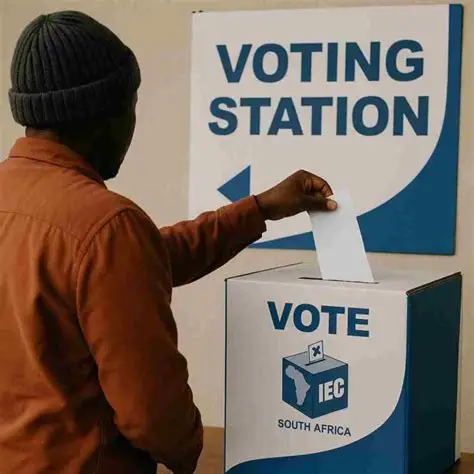
“South Africa’s political landscape has dramatically shifted as the ANC loses majority voter support for the first time, ending decades of dominance. The DA now leads a coalition Government of National Unity, promising citizen-centered governance and accountability.”
South Africa’s democratic journey has reached a watershed moment. For the first time in its post-apartheid history, the African National Congress (ANC) has lost its majority voter support, signaling the end of an era defined by single-party dominance. The Democratic Alliance (DA), long positioned as the primary opposition, now leads a Government of National Unity (GNU), reshaping the country’s political economy and governance structures.
Historical Context
Since 1994, the ANC has been synonymous with governance in South Africa. Its liberation credentials and broad-based support allowed it to dominate elections for three decades. However, persistent challenges—corruption scandals, service delivery failures, and economic stagnation—gradually eroded public trust. The 2026 elections crystallized this discontent, with voters rejecting single-party rule in favor of coalition governance.
The Electoral Shift
The DA’s rise to leadership within the GNU represents more than a numerical victory. It reflects a broader demand for accountability, transparency, and citizen-centered governance. Party leader Geordin Hill-Lewis emphasized that the DA’s participation in the GNU is both a safeguard against populist movements and a platform to demonstrate alternative governance models.
Implications for Governance
The coalition government introduces new dynamics:
- Negotiation and compromise across party lines.
- Checks on executive power, with the DA pledging to speak out when the ANC prioritizes party interests over citizens.
- Resource distribution subject to coalition agreements rather than unilateral control.
This marks a departure from decades of ANC-driven policymaking, where electoral dominance translated directly into control over state machinery.
Citizen Power and Accountability
The DA frames this transition as a return of power to ordinary South Africans. Beyond the right to vote, citizens are urged to actively shape governance through participation, registration, and accountability mechanisms. The GNU’s success will depend on whether it can deliver tangible improvements in service delivery, institutional integrity, and economic opportunity.
Risks and Challenges
While the GNU offers hope, it also faces significant challenges:
- Coalition fragility: differing party agendas may strain unity.
- Populist pressures: movements outside the GNU may exploit dissatisfaction.
- Institutional inertia: entrenched bureaucratic practices could slow reform.
The DA’s promise of transparency and accountability will be tested in real-time, as citizens demand evidence of progress.
Broader Political Economy
The end of ANC dominance alters South Africa’s political economy. Procurement processes, resource distribution, and policy priorities will now be subject to coalition negotiation. This could foster more inclusive governance but also risks gridlock if consensus proves elusive.
Conclusion
South Africa’s 2026 elections mark a turning point in its democratic evolution. The ANC’s loss of majority support signals the end of single-party dominance, while the DA’s leadership in the GNU opens a new chapter centered on citizen agency. Whether this coalition delivers on its promises will determine the trajectory of South Africa’s democracy in the years ahead.



