




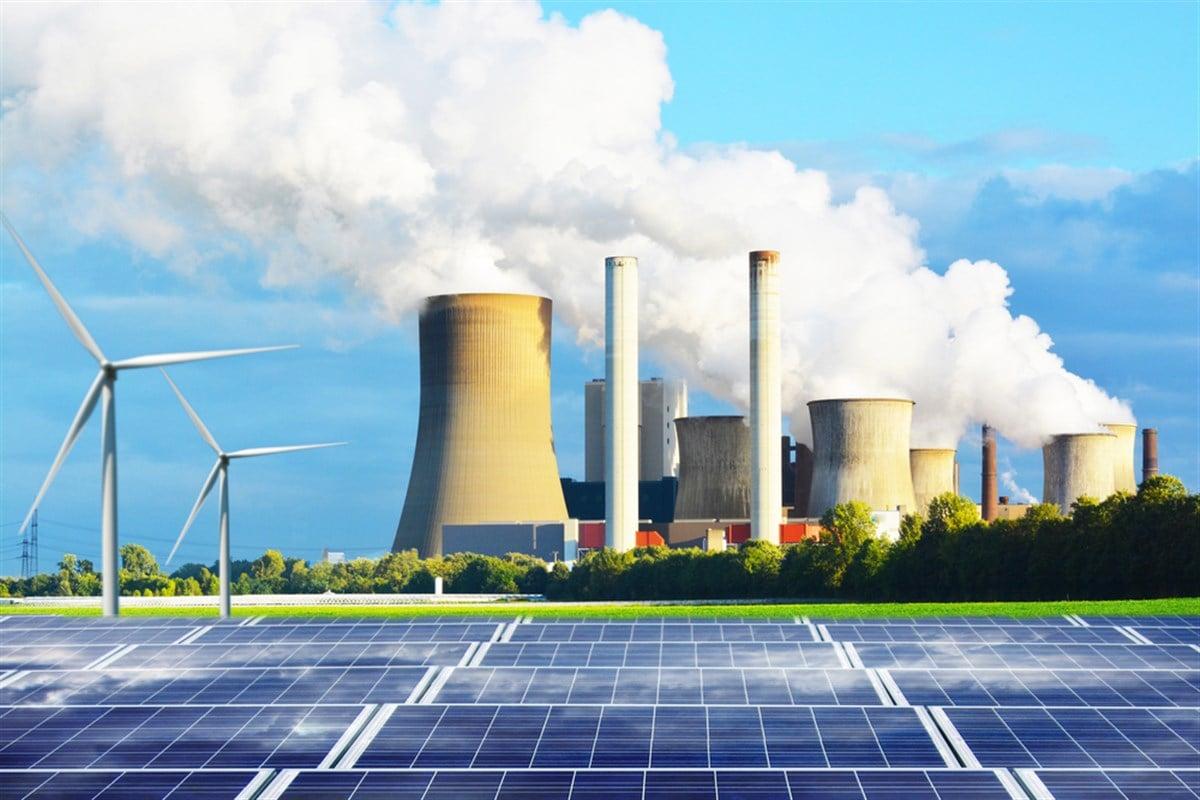
“South Africa may be able to meet its greenhouse-gas emissions targets, but new analysis questions whether those targets require enough additional emissions reduction to align with the Paris Agreement. The issue connects environmental science with electricity planning, renewable-energy technology, carbon accounting and the country’s transition away from coal.”
South Africa’s emissions targets face a new test
South Africa’s climate debate is entering a technically important phase: the country may be able to meet its greenhouse-gas targets, but new analysis questions whether those targets require enough additional emissions reduction to align with the Paris Agreement.
A GroundUp analysis published on 25 September and surfaced by Moneyweb on 27 September examines South Africa’s emissions trajectory and argues that the country’s targets may be relatively easy to reach under policies already in place. The analysis draws on the latest draft national greenhouse-gas inventory, research commissioned by government and assessments by Climate Action Tracker. GroundUp reports that South Africa’s estimated net emissions for 2024 were about 444 million tonnes of greenhouse gases, after an estimated 33 million tonnes were absorbed by land such as forests, thickets and grasslands. Gross emissions were about 477 million tonnes.
The numbers matter because South Africa’s economy remains strongly connected to coal-fired electricity. According to the analysis, the energy sector alone produced 375 million tonnes of emissions in 2024. That figure was already above the lower end of the country’s 2030 emissions target range, which is 350 million tonnes. To reach the upper end of the range, the analysis says emissions would need to fall by another 24 million tonnes; reaching the lower end would require about 94 million tonnes of reductions.
This creates a central environmental and technology question: how quickly can South Africa reduce carbon emissions while maintaining reliable electricity and economic activity?
The country’s electricity transition is critical. The 2025 Integrated Resource Plan provides for the retirement of 8 gigawatts of coal capacity by 2030, but the GroundUp analysis notes that the plan also depends on 6 gigawatts of new gas generation being available. It also considers extending five large coal stations beyond their original 50-year lifetimes. Eskom has already moved the closure dates of five coal stations to 2030 amid delays in bringing private electricity projects online.
Emissions reduction is not simply a matter of setting a number. It depends on technologies including solar photovoltaic systems, wind turbines, grid infrastructure, batteries, transmission networks, flexible generation and potentially green hydrogen.
South Africa has already seen a substantial expansion of renewable-energy technology. Recent electricity data compiled from Eskom information show that coal supplied about 81% of reported grid generation in August 2026, while wind supplied 5.6% and solar photovoltaic generation 2%. The same dataset reported no load shedding during the month, although rooftop solar is not included in the grid-generation figures.
Renewable technologies are becoming more important, but the electricity system still has a large coal component. For engineers and energy planners, additional renewable capacity must therefore be accompanied by transmission, storage and system-management solutions capable of handling changing supply patterns.
Another important scientific issue is the land sink used in national emissions accounting. The latest draft inventory estimates that land absorbed around 33 million tonnes of carbon dioxide equivalent in 2024. However, the GroundUp analysis notes that this estimate is uncertain and that some recorded land changes may be influenced by rainfall rather than representing permanent changes in carbon storage.
Forests, grasslands and other ecosystems can remove carbon from the atmosphere, but storage can change because of drought, fire, land-use change, vegetation growth and rainfall. Reliable climate policy therefore requires monitoring systems that can distinguish temporary changes from long-term carbon sequestration.
GroundUp reports that the Presidential Climate Commission has linked part of South Africa’s emissions decline since the 2008 peak to economic stagnation and load shedding rather than deliberate decarbonisation. After load shedding eased in 2024, energy-sector emissions increased as Eskom used more coal.
That distinction is important. A fall in emissions caused by lower economic activity is different from a structural reduction achieved through cleaner technology. The first can reverse when electricity demand and industrial production recover. The second can provide a more durable pathway toward lower emissions if renewable generation, efficiency, storage and cleaner industrial processes replace high-carbon technologies.
South Africa’s 2035 target adds another layer. The country’s lower 2035 target is 320 million tonnes, while research by the University of Cape Town commissioned by government found that existing policies, including the Renewable Energy Masterplan, could potentially result in emissions between 289 million and 359 million tonnes by 2035.
If those projections hold, the country could approach or meet parts of its target range without substantially stronger policies. Supporters of stronger climate action argue that this would indicate that the targets are not sufficiently ambitious. That is a policy assessment rather than a scientific measurement, but it matters because national targets influence investment decisions, infrastructure planning and the credibility of climate commitments.
GroundUp reports concerns that insufficient progress on the energy transition could affect access to international finance and expose South African exporters to carbon-related measures in importing countries. For businesses, emissions performance increasingly affects financing, market access, supply chains and competitiveness.
Industrial decarbonisation may require more efficient processes, electrification, renewable hydrogen, low-carbon fuels, carbon management and improved energy efficiency. Eskom has also highlighted work involving clean-coal research and green hydrogen as part of its broader technology and energy-transition programme.
These technologies have different costs, maturity levels and environmental implications, so their contribution will need to be assessed using evidence.
A target can be technically achievable while still being less demanding than emissions reductions scientists say are required globally. GroundUp cites Climate Action Tracker’s assessment that South Africa’s existing targets represent a 16% to 29% reduction from 2022 levels, while a 40% reduction by 2035 would be consistent with its assessment of what South Africa should do for a 1.5°C pathway.
This difference between achievement and ambition is central to the story. Meeting a national target does not automatically mean the country is on a pathway consistent with every global temperature objective. Conversely, stronger targets are meaningful only if they can be implemented through credible investment, technology deployment, institutional capacity and measurable emissions reductions.
For South Africa, the coming years will therefore be closely linked to data. Scientists need better measurements of emissions and land-based carbon sinks. Energy planners need reliable information about electricity demand, renewable generation, storage and transmission.
The reporting shows that the quality of emissions reductions matters as much as headline numbers. A decline caused by changing economic conditions, uncertain land absorption or temporary reductions in electricity demand is different from a sustained decline produced by cleaner energy systems and improved industrial technology.
The significance is clear: South Africa’s climate targets are becoming a practical test of measurement, engineering and implementation. Renewable technologies and policy mechanisms can contribute to lower emissions, but coal remains central to electricity production.
As South Africa moves toward 2030 and 2035, evidence will increasingly come from emissions inventories, electricity data, technology deployment and the performance of natural carbon sinks. Those measurements will help determine whether progress represents a temporary statistical improvement or a lasting transformation of the country’s energy and environmental systems.



