




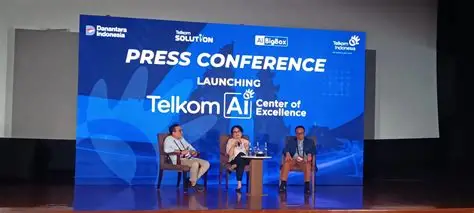
“Telkom has pledged R100‑million to establish the Telkom AI Institute, a platform designed to train South Africans in practical AI and digital skills, with a focus on youth, small businesses, and underserved communities. The initiative aims to close the gap between connectivity and meaningful digital participation, positioning South Africa as a leader in inclusive AI‑driven growth.”
South Africa’s digital economy is undergoing a profound transformation, and artificial intelligence (AI) is at the center of this shift. On 31 July 2026, Telkom announced a landmark investment of R100‑million to establish the Telkom AI Institute, a platform dedicated to equipping South Africans with AI and digital skills. This initiative is not only a corporate investment but also a national milestone in bridging the digital divide and ensuring inclusive participation in the AI‑driven future.
The Vision Behind the Institute
Telkom’s CEO, Serame Taukobong, emphasized that while South Africa has made significant progress in expanding network coverage, the real challenge lies in enabling citizens to use connectivity for economic empowerment. The AI Institute is designed to address this challenge by providing job‑ready training programs, focusing on practical applications of AI in business, governance, and everyday life.
The initiative aligns with Telkom’s Vision 2030 strategy, which seeks to reposition the company from being a traditional infrastructure provider to becoming a builder of digital skills and innovation ecosystems. By doing so, Telkom aims to ensure that South Africa competes globally in the rapidly evolving AI landscape.
Key Objectives
- Digital Skills Development: Training programs will target young people, small businesses, and underserved communities, ensuring inclusivity.
- Economic Inclusion: The institute will foster local innovation, enabling entrepreneurs to leverage AI for new business models.
- Global Competitiveness: By equipping citizens with advanced skills, South Africa can position itself as a regional leader in AI adoption.
- Bridging the Digital Divide: Moving beyond connectivity, the focus is on digital literacy and applied AI skills.
Context: The Global AI Race
Telkom’s pledge comes at a time when AI is reshaping economies worldwide. According to the International Telecommunication Union (ITU), global pledges under the Partner2Connect Digital Coalition have reached $82‑billion, with projects spanning over 190 countries. Telkom’s commitment places South Africa among a select group of African nations recognized for their proactive role in digital development.
The South African Digital Divide
While South Africa has achieved near‑universal mobile coverage, a second digital divide has emerged: the gap between those who are connected and those who can effectively use digital tools to build livelihoods. AI adoption risks widening this divide unless deliberate efforts are made to ensure inclusivity. The Telkom AI Institute directly addresses this challenge by prioritizing practical, accessible training.
Economic Impact
The institute is expected to generate significant economic benefits:
- Job Creation: By training thousands of South Africans in AI, the initiative will create new employment opportunities in tech and related sectors.
- SME Empowerment: Small businesses will gain access to AI tools, enabling them to compete more effectively in the digital marketplace.
- Innovation Ecosystem: The institute will serve as a hub for startups, fostering collaboration between academia, industry, and government.
Regional Leadership
South Africa’s proactive stance on AI positions it as a regional leader in sub‑Saharan Africa. The Telkom AI Institute could serve as a model for other African nations seeking to balance innovation with inclusivity. By investing in skills development, South Africa is not only preparing its workforce for the future but also strengthening its geopolitical influence in the digital era.
Challenges and Risks
Despite its promise, the initiative faces challenges:
- Skills Gap: The pace of AI adoption may outstrip the ability of training programs to keep up.
- Regulatory Frameworks: Ensuring ethical AI use requires robust governance structures.
- Infrastructure Limitations: Rural areas may still struggle with connectivity, limiting access to training.
Conclusion
Telkom’s R100‑million investment in the AI Institute marks a turning point in South Africa’s digital journey. By focusing on skills, inclusion, and innovation, the initiative addresses the critical challenge of ensuring that connectivity translates into meaningful economic participation. As AI continues to reshape global economies, South Africa’s commitment to inclusive digital development positions it as a forward‑thinking leader in the African context.



