




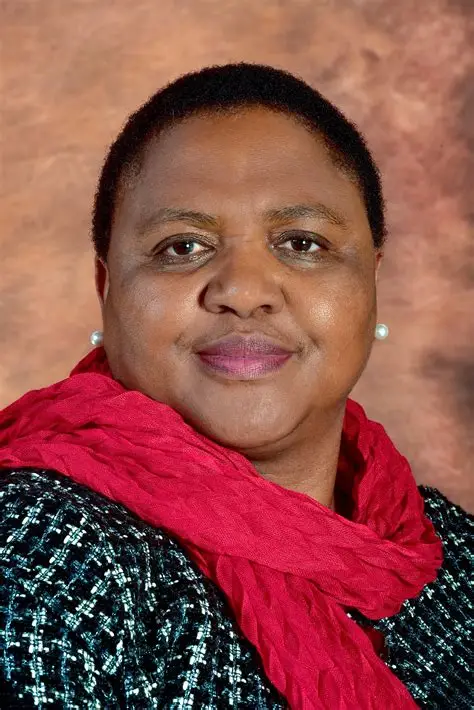
“The Economic Freedom Fighters (EFF) have declared confidence in removing Speaker Thoko Didiza through a motion of no confidence, citing her handling of President Cyril Ramaphosa’s impeachment inquiry. This unprecedented move highlights deep constitutional tensions and could alter the balance of parliamentary governance in South Africa.”
South Africa’s political landscape is entering uncharted territory as the Economic Freedom Fighters (EFF) prepare to challenge National Assembly Speaker Thoko Didiza through a motion of no confidence. This move, unprecedented in the country’s parliamentary history, underscores growing dissatisfaction with governance processes and the handling of President Cyril Ramaphosa’s impeachment inquiry.
Background to the Motion
The motion was introduced by EFF leader Julius Malema in June 2026, targeting Didiza’s controversial decision not to oppose Ramaphosa’s application to halt the Section 89 impeachment inquiry into the Phala Phala farm scandal. Critics argue that her stance undermined parliamentary independence and accountability.
EFF Treasurer-General Omphile Maotwe emphasized that the Speaker must be held accountable for decisions that weaken constitutional oversight. He noted that this motion represents a watershed moment in South Africa’s democratic evolution, as it challenges the very neutrality expected of the Speaker’s office.
Constitutional Implications
This motion carries significant constitutional weight. The Speaker is traditionally seen as a neutral arbiter, ensuring parliamentary processes remain fair and transparent. By targeting Didiza, the EFF is questioning whether neutrality has been compromised in favor of executive protection.
Legal experts suggest that if the motion succeeds, it could set a precedent for holding parliamentary leaders accountable in ways previously unseen. It may also embolden opposition parties to challenge institutional figures more aggressively.
Coalition Politics and Parliamentary Dynamics
South Africa’s current political environment is characterized by fragile coalitions and shifting alliances. The ANC, while holding the largest number of seats, lacks an outright majority, making coalition-building essential.
The EFF’s motion forces parties to take a stand on parliamentary accountability, potentially reshaping coalition negotiations. Smaller parties may align with the EFF to strengthen their bargaining power, while the ANC will likely mobilize its allies to defend Didiza.
Criticism of Virtual Parliamentary Sittings
Beyond the impeachment issue, the EFF has criticized Parliament’s reliance on virtual sittings. Maotwe argued that conducting critical debates online diminishes their gravity and wastes resources, pointing to idle facilities in Pretoria that continue to incur rental costs.
The EFF reiterated its longstanding proposal to relocate the legislative capital from Cape Town to Tshwane (Pretoria), arguing that consolidating administrative and legislative functions would reduce wasteful expenditure and improve efficiency.
Election Synchronization Proposal
The EFF also used this moment to highlight its proposal for synchronizing local, provincial, and national elections. According to Maotwe, this would ensure uninterrupted five-year cycles of service delivery, eliminating disruptions caused by staggered elections. The ANC has consistently opposed this idea, citing logistical challenges.
Public Reaction
Public opinion remains divided. Supporters of the motion view it as a necessary step toward accountability, while critics warn it could destabilize parliamentary processes. Civil society organizations have called for transparency in the debate, urging parties to prioritize constitutional integrity over political maneuvering.
Potential Outcomes
If the motion succeeds, Didiza would be removed, forcing Parliament to elect a new Speaker. This could significantly alter parliamentary dynamics, especially if opposition parties gain influence in the selection process.
If the motion fails, the EFF may still achieve symbolic victory by highlighting weaknesses in parliamentary accountability and rallying public support ahead of upcoming elections.
Conclusion
The motion of no confidence against Speaker Thoko Didiza represents a turning point in South Africa’s democratic journey. Whether successful or not, it underscores the growing demand for accountability, transparency, and reform in parliamentary governance.



