




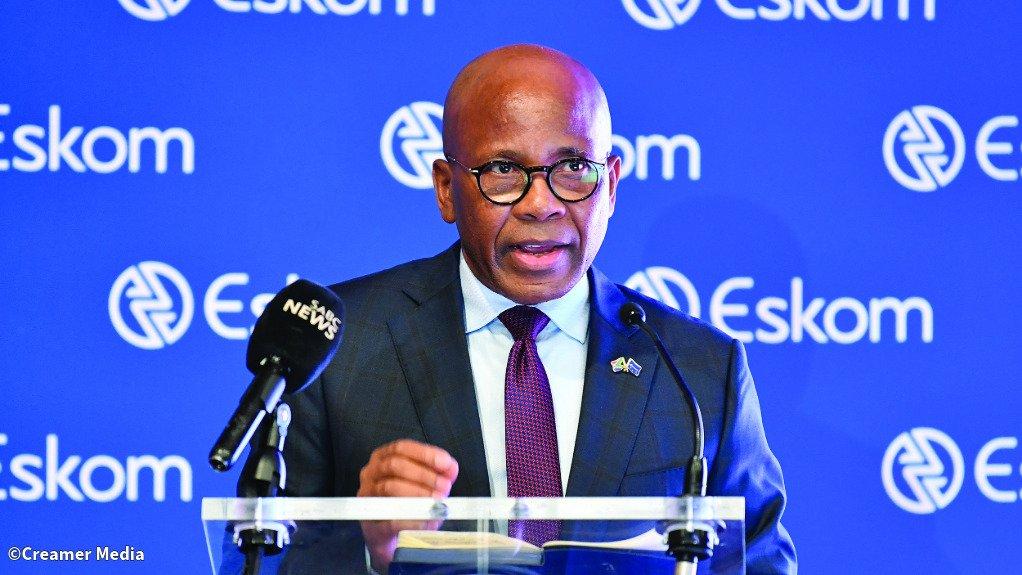
“South Africa has extended Mteto Nyati’s tenure as Eskom Board Chairperson for another three years, with the extension taking effect on 1 November 2026, as government shifts the utility’s focus from recovering generation performance toward long-term financial sustainability, electricity affordability and market reform. The move comes as Eskom enters what Electricity and Energy Minister Kgosientsho Ramokgopa has described as “Eskom 2.0”, with expectations that the utility will expand the grid, plan new generation, adapt to private-sector participation and reduce pressure on electricity customers.”
South Africa’s electricity sector is entering a new phase following the decision to extend Mteto Nyati’s tenure as chairperson of the Eskom Board for another three years. The announcement, made by Electricity and Energy Minister Kgosientsho Ramokgopa on 25 September 2026, comes at an important point in the country’s electricity reform programme, as Eskom moves beyond the immediate objective of restoring generation performance and begins concentrating on affordability, financial sustainability, grid development and its role in a more competitive electricity market.
Nyati’s current term was scheduled to end at the close of October. Cabinet has now approved his continuation from 1 November 2026, giving the board chair a further three-year mandate. Government says the extension is intended to provide continuity as Eskom implements the next stage of its transformation and builds on improvements achieved during the utility’s recovery period.
The leadership decision is significant because Eskom’s circumstances have changed considerably from the period when South Africa experienced persistent load-shedding. The government now says the country has moved from a period dominated by electricity shortages toward one in which the utility must consider excess generation capacity, declining electricity sales, renewable-energy integration and the emergence of additional electricity producers.
From Generation Recovery to Eskom 2.0
At the centre of the latest announcement is the concept of “Eskom 2.0.” According to the Department of Electricity and Energy, the next phase requires Eskom to develop a longer-term strategy covering its obligations, generation mix, commercial position and investment requirements.
The government’s expectations are broader than simply keeping power stations operating. Eskom is expected to plan for future generation capacity, expand the electricity grid, improve relationships with customers and adapt to a market where independent power producers, electricity traders and other private-sector participants have an increasingly important role.
SAnews reported that Ramokgopa had specifically instructed the Eskom board to focus on lowering electricity costs, maintaining reliability and securing the utility’s long-term future. The minister also linked reliable and affordable electricity to investment and employment, placing the utility at the centre of broader economic objectives.
The shift means that Eskom’s performance will increasingly be judged not only by whether the lights remain on, but also by whether electricity can be supplied at costs that households and businesses can manage.
Profitability Does Not Automatically Mean Lower Electricity Prices
The leadership announcement follows Eskom’s improved financial results. BusinessTech reported that Eskom recorded approximately R30 billion in profit, but that customers should not expect an immediate reduction in electricity prices as a result.
Nyati said the utility intends to retain earnings for investment rather than distribute them as dividends. According to the report, Eskom intends to use its improved financial position to support future growth, including investment in renewable energy and other areas that could contribute to lower costs over the longer term.
This creates an important distinction between profitability and affordability. A profitable utility can have greater capacity to invest in infrastructure, but electricity prices also depend on generation costs, financing, network investment, regulatory decisions and the broader structure of the electricity market.
The government’s latest expectations therefore place cost reduction alongside reliability and financial sustainability rather than treating them as separate objectives.
The Challenge of Municipal Electricity Debt
Another major issue facing Eskom is the financial pressure created by municipal electricity debt.
eNCA reported on 25 September that municipalities owed Eskom approximately R450 billion, according to Ramokgopa. The minister warned that the debt represents a significant threat to Eskom’s finances and to the broader electricity-market reform programme.
The municipal debt problem illustrates the complexity of South Africa’s electricity system. Eskom may improve generation performance, but weaknesses in the distribution and payment system can still undermine the financial health of the electricity sector.
Ramokgopa said Eskom was increasingly being required to intervene on the distribution side of the market, particularly where municipalities holding electricity distribution licences struggle to collect payments from customers.
Consequently, the success of Eskom 2.0 will depend not only on what happens inside Eskom’s power stations but also on the relationships among Eskom, municipalities, electricity customers, regulators, private generators and other market participants.
Eskom’s Changing Position in the Electricity Market
South Africa is also restructuring Eskom itself. Government has been pursuing the separation of the utility into generation, transmission and distribution functions.
The latest government statement says progress has been made in the separation process, including the establishment and operationalisation of the National Transmission Company South Africa (NTCSA) and the launch of Eskom Green, Eskom’s utility-scale renewable-energy business.
The reforms are intended to help create a more competitive electricity environment while retaining strategic public ownership of critical infrastructure.
President Cyril Ramaphosa previously reaffirmed government’s intention to establish an independent transmission system operator with ownership and control of transmission assets remaining in state hands. Government has said that such reform is intended to create a more level playing field and help unlock additional investment in electricity infrastructure.
This changing structure means Eskom will have to operate differently from the traditional vertically integrated monopoly that dominated South Africa’s electricity system for decades.
Renewable Energy and Grid Expansion
Renewable energy is another major part of Eskom’s next phase.
The government’s expectations for Eskom include developing its future generation mix while assessing the role of coal, gas, nuclear and renewable energy. The official statement says Eskom must undertake technical and financial work concerning its existing generation fleet, including coal emissions reduction, repurposing and repowering power-station sites, as well as its future strategic role in gas and nuclear power.
At the same time, Eskom Green is expected to develop a credible renewable-energy project pipeline.
Grid expansion is particularly important because South Africa’s renewable-energy resources are concentrated in areas that are not always close to major electricity-demand centres. As more wind and solar projects seek connection to the national system, transmission capacity becomes an increasingly important part of the country’s energy strategy.
Engineering News has separately highlighted the importance of grid and market reform to future renewable-energy development. Its September 25 report noted that standalone wind projects are expected to continue contributing to new renewable deployments, while changes in electricity pricing and market structures will influence future investment.
What the New Mandate Means for Eskom
The three-year extension gives Nyati and the Eskom board a defined period in which to implement the next stage of the utility’s strategy.
Government expects the board to prepare a roadmap covering the next three, five and ten years. That roadmap is expected to address Eskom’s public obligations, generation portfolio, commercial position and investment requirements.
The government has also indicated that Eskom should reduce its reliance on repeated fiscal support and should not depend on sustained double-digit electricity tariff increases to remain viable.
For households and businesses, this makes affordability one of the central measures of the next stage of Eskom’s recovery.
For industry, reliable electricity is equally important. South African manufacturers, mines, commercial operations and small businesses require predictable power supplies to plan production, investment and employment. The end of severe load-shedding removes one major constraint, but electricity prices and network reliability remain important considerations for competitiveness.
A Different Set of Energy Problems
The latest developments demonstrate how South Africa’s electricity challenge has changed.
During the worst period of load-shedding, the central concern was whether Eskom could generate enough electricity to meet demand. Now, government says the country has reached a point where generation capacity can exceed current demand.
That does not mean South Africa’s electricity problems have disappeared. Instead, the challenge is shifting toward how available generation is financed, transmitted, distributed and sold.
The country must also determine how Eskom’s existing coal fleet fits into a changing energy system while expanding renewable generation and maintaining grid stability.
The extension of Nyati’s term therefore comes at a transitional moment. Eskom has to preserve the operational improvements already achieved while simultaneously changing its business model.
The Road Ahead
The government’s latest announcement establishes several priorities for the coming years: maintaining energy security, reducing electricity costs, expanding transmission infrastructure, developing future generation, improving Eskom’s financial position and integrating more participants into the electricity market.
Eskom itself welcomed Nyati’s reappointment, saying the extension provides governance and strategic continuity while the utility advances operational and financial sustainability, energy security and market reforms.
For South Africa, the next stage will therefore be less about recovering from the immediate electricity crisis and more about building an electricity system capable of supporting economic growth over the longer term.
The success of that transition will depend on the implementation of the government’s plans, the performance of Eskom’s leadership, the expansion of transmission infrastructure, the financial health of municipalities, investment by private electricity producers and the ability of the electricity market to balance affordability with the costs of maintaining and expanding infrastructure.
With Nyati remaining as board chair until 2029, Eskom now has leadership continuity as it enters this new phase. The central question for the coming years will be how effectively the utility can convert the gains of its generation recovery into a sustainable electricity system that combines reliability, affordability, investment and energy-market reform.



