




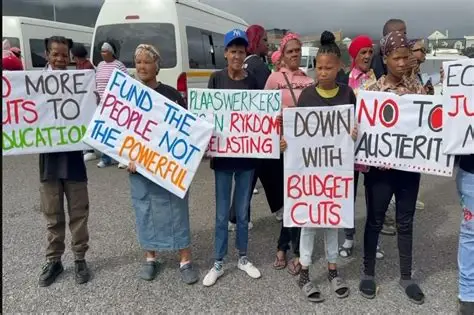
“Operation Ubuntu mobilised thousands across Johannesburg, Cape Town, and Durban to demand an end to xenophobia, Afrophobia, and systemic deprivation affecting both migrants and citizens. The coalition of more than 60 organisations presented memoranda to government offices, insisting on housing justice, migrant reintegration, and accountability for hate speech and vigilante violence.”
South Africa witnessed one of its largest coordinated civil society actions in recent years. Under the banner “Operation Ubuntu – Africa Stands Together”, activists, community organisations, and social justice movements staged nationwide demonstrations against xenophobia and Afrophobia. The protests, held in Johannesburg, Cape Town, and Durban, were not isolated events but part of a broader campaign to confront systemic failures in governance, housing, and migrant rights.
Background
South Africa has long grappled with tensions between local communities and migrant populations, often exacerbated by economic hardship, unemployment, and poor service delivery. In recent months, xenophobic rhetoric and vigilante violence surged, particularly in Gauteng and KwaZulu-Natal. Operation Ubuntu emerged as a direct response, aiming to shift the narrative from division to solidarity.
The Protests
- Johannesburg: Marchers delivered a memorandum to Gauteng Premier Panyaza Lesufi’s office, demanding stronger protections for migrants and accountability for vigilante groups.
- Cape Town: Demonstrators gathered in Hanover Street, highlighting failures in housing and healthcare delivery.
- Durban: Activists staged placard protests outside City Hall, emphasising solidarity with displaced migrant communities.
Key Demands
Operation Ubuntu’s memorandum outlined several urgent priorities:
- Housing and Land Justice: End forced evictions and ensure equitable access to housing.
- Migrant Reintegration: Immediate reintegration of displaced migrants and closure of inhumane facilities like Lindela Repatriation Centre.
- Accountability: Arrest and prosecute individuals inciting violence and hate speech against foreign nationals.
- Social Rights: Guarantee access to healthcare, education, and essential services for all residents, regardless of nationality.
- Climate and Economic Justice: Prevent looting of Africa’s minerals and address deprivation affecting both migrants and citizens.
Government Response
Authorities acknowledged the protests but emphasised maintaining peace. Gauteng Police Commissioner Tommy Mthombeni confirmed that law enforcement acted against unruly marchers in Springs the previous week, arresting over 60 individuals. However, activists accused police of failing to curb vigilante groups and online incitement campaigns targeting refugees.
Broader Context
The protests come at a politically sensitive time, with South Africa preparing for the 2026 Local Government Elections. Civil society groups argue that xenophobia is being weaponised for political gain, distracting from governance failures in housing, jobs, and service delivery. Operation Ubuntu insists that deprivation is a result of state neglect, not migrant presence.
Pan-African Solidarity
Beyond domestic concerns, Operation Ubuntu framed its struggle within a continental context. Activists called for pan-African solidarity, rejecting Afrophobia and urging governments across the continent to protect vulnerable communities. The campaign emphasised that South Africa’s leadership role in the Southern African Development Community (SADC) must align with principles of inclusivity and justice.
Voices from the Ground
General Moyo, one of the coordinators, accused police of ignoring vigilante violence. Community leaders stressed that migrants are scapegoated for failures in governance, while ordinary citizens suffer equally from unemployment and poor services. Placards carried messages such as “Housing for All” and “Stop Deportations – Fix Documentation.”
Conclusion
Operation Ubuntu represents a turning point in South African activism. By uniting diverse organisations under a common cause, it challenges both xenophobia and systemic deprivation. Whether the government responds meaningfully remains uncertain, but the protests have already reshaped the discourse, placing solidarity and justice at the centre of national debate.



