




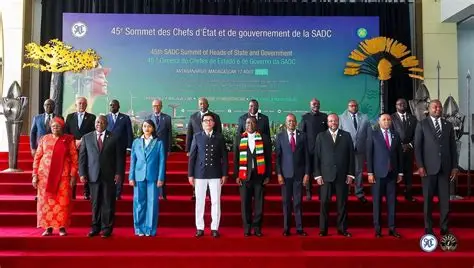
“South Africa has formally taken over the chairmanship of the Southern African Development Community (SADC), with President Cyril Ramaphosa expected to steer the bloc through a period of economic integration and geopolitical uncertainty. The leadership role underscores Pretoria’s ambition to align regional priorities with global economic shifts, particularly in trade, infrastructure, and critical minerals.”
South Africa officially assumed the chairmanship of the Southern African Development Community (SADC), a 16-member regional bloc central to Africa’s economic and political integration. President Cyril Ramaphosa now faces the task of guiding the organization through a year marked by both opportunities and challenges, as global tensions and domestic pressures converge on the region.
Context and Significance
The SADC chairmanship rotates annually among member states, but South Africa’s assumption carries particular weight. As the continent’s most industrialized economy and a key player in BRICS and the African Union, Pretoria’s leadership is expected to influence regional priorities in trade, infrastructure, and security cooperation. The 46th SADC Summit, scheduled for August 16–17, 2026 in Durban, will be held under the theme: “Resilient, Sustainable and Inclusive Industrialisation through Infrastructure Development, Agricultural and Critical Minerals Transformation in Pursuit of a Just World.”
Strategic Priorities
South Africa’s chairmanship is expected to focus on several critical areas:
- Regional Trade Integration: Strengthening customs union reforms and harmonizing border management protocols.
- Security Cooperation: Enhancing collaboration against transnational crime and terrorism.
- Infrastructure Development: Accelerating investment in transport corridors, energy grids, and digital infrastructure.
- Agricultural Transformation: Promoting food security and sustainable farming practices.
These priorities align with global economic shifts, particularly the demand for critical minerals in renewable energy and technology sectors.
Challenges Ahead
Despite optimism, South Africa faces several challenges:
- Balancing National and Regional Interests: Pretoria must ensure its priorities align with those of other SADC members.
- Global Geopolitical Tensions: Conflicts in Eastern Europe, the Middle East, and U.S.–Iran friction could affect regional stability and trade.
- Domestic Pressures: South Africa continues to grapple with economic inequality, digital media crises, and public health litigation, which may constrain its ability to lead effectively.
International Relations Dimension
South Africa’s leadership in SADC strengthens its global positioning. By aligning regional development with international agendas, Pretoria seeks to reinforce its role as a bridge between Africa and global powers. Hosting the SADC Summit in Durban further underscores South Africa’s diplomatic influence, as it provides a platform to showcase its commitment to multilateralism and regional solidarity.
Gender and Inclusivity
The summit will also emphasize gender equality and women’s empowerment, reflecting South Africa’s commemoration of Women’s Month in August. Regional leaders are expected to adopt measures to accelerate progress toward the 2030 development agenda, ensuring inclusive participation in economic transformation.
Conclusion
South Africa’s assumption of the SADC chairmanship represents both a symbolic and strategic milestone in its foreign policy. With President Ramaphosa at the helm, Pretoria has the opportunity to shape regional priorities in ways that resonate globally. The coming year will test South Africa’s ability to balance domestic challenges with regional leadership, while navigating the complexities of international relations.



