




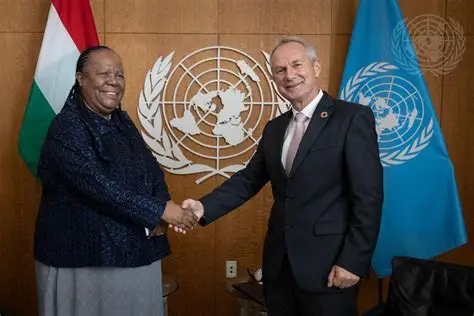
“President Cyril Ramaphosa pledged that perpetrators of xenophobic violence against foreign nationals in South Africa will be arrested and prosecuted, rejecting claims of regional isolation. His stance emphasizes South Africa’s constitutional duty to uphold the rule of law while reaffirming its commitment to Pan-African cooperation.”
South Africa’s international reputation as a Pan-African leader has come under strain in recent months due to escalating anti-migrant violence. On 26 August 2026, President Cyril Ramaphosa addressed these concerns directly, pledging decisive legal action against perpetrators of xenophobic attacks. His statement comes at a critical juncture, as regional partners in the African Union (AU) and Southern African Development Community (SADC) have expressed unease over South Africa’s domestic unrest and its implications for continental unity.
Background: Rising Xenophobic Tensions
Anti-migrant protests have surged across South Africa, particularly in urban centers where economic hardship and unemployment fuel resentment toward foreign nationals. These protests have often escalated into violence, with businesses owned by migrants targeted and communities destabilized. Critics argue that such incidents undermine South Africa’s credibility as a champion of African solidarity, especially given its historical role in promoting integration and cooperation within the AU.
Ramaphosa’s Commitment
President Ramaphosa’s pledge to arrest and prosecute offenders marks a significant policy stance. He emphasized that xenophobia is incompatible with South Africa’s constitutional values and international obligations. By framing the issue as both a domestic legal matter and a diplomatic necessity, Ramaphosa sought to reassure regional leaders that South Africa remains committed to inclusivity and cooperation. His remarks also counter claims that South Africa is becoming isolated within Africa due to its internal challenges.
Legal and Governance Dimensions
The President’s announcement reinforces South Africa’s constitutional obligation to protect all individuals within its borders. Legal experts note that prosecutions under criminal law for hate crimes and violence could set important precedents, strengthening the judiciary’s role in combating xenophobia. Domestically, this pledge aligns with Ramaphosa’s broader governance reforms aimed at improving accountability and service delivery at municipal levels. These reforms are critical ahead of upcoming local elections, where public trust in government institutions will be tested.
International Relations Implications
South Africa’s Pan-African credibility has been questioned by peers in the AU and SADC. Recent anti-immigration protests have raised concerns among neighboring states, who view xenophobia as contradictory to South Africa’s diplomatic rhetoric of solidarity. Ramaphosa’s statement is therefore not only about domestic law enforcement but also about reassuring Africa that South Africa remains committed to unity. His leadership will be closely scrutinized, particularly given South Africa’s role as host of the recent SADC summit in Durban, where regional industrialization and infrastructure development were emphasized.
Regional Context
The issue of migration is not unique to South Africa. Across the continent, economic disparities and political instability drive cross-border movement, often straining host countries. Nigeria, for instance, is grappling with insecurity following mass abductions in Niger State, while Guinea faces public outrage after a landfill collapse. These crises highlight the interconnectedness of African states and the need for cooperative solutions. Ramaphosa’s pledge thus resonates beyond South Africa, reinforcing the principle that African nations must collectively address challenges of migration, security, and governance.
Risks and Challenges
Despite Ramaphosa’s commitment, significant challenges remain. Enforcement of anti-xenophobia laws requires robust policing, judicial efficiency, and political will. Skeptics argue that past pledges have not translated into meaningful action, with perpetrators often escaping accountability. Moreover, economic hardship continues to fuel resentment, suggesting that legal measures must be complemented by socio-economic reforms to address root causes of migration-related tensions.
Conclusion
President Cyril Ramaphosa’s pledge to arrest and prosecute perpetrators of anti-migrant violence represents a pivotal moment in South Africa’s domestic and international politics. By confronting xenophobia head-on, Ramaphosa seeks to restore public order, uphold constitutional values, and reaffirm South Africa’s Pan-African leadership. The success of this initiative will depend on effective enforcement, sustained governance reforms, and regional cooperation. Ultimately, South Africa’s credibility as a continental leader hinges on its ability to balance domestic challenges with its international commitments.



