




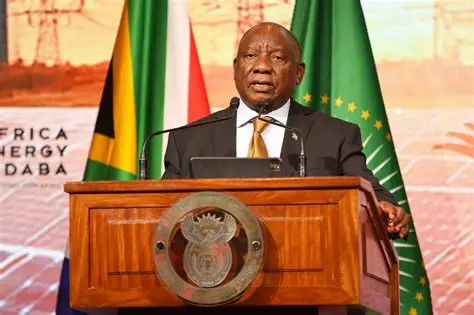
”President Cyril Ramaphosa has pledged that perpetrators of xenophobic attacks against foreign nationals will be arrested and prosecuted, emphasizing that South Africa does not condone violence against migrants. He assured Parliament and African leaders that the government’s actions will demonstrate seriousness in addressing migration challenges and restoring continental trust.”
On 26 August 2026, President Cyril Ramaphosa addressed Parliament in response to mounting criticism over xenophobic violence targeting foreign nationals in South Africa. His remarks came amid growing pressure from opposition leaders, civil society, and African governments, all demanding accountability and decisive policy action. Ramaphosa’s pledge to prosecute perpetrators represents a pivotal moment in South Africa’s domestic and foreign policy, with implications for governance, diplomacy, and social cohesion.
Background: Rising Xenophobic Violence
South Africa has long grappled with sporadic outbreaks of xenophobic violence, often directed at African migrants from Zimbabwe, Mozambique, Nigeria, and other neighboring states. These incidents have been fueled by economic hardship, unemployment, and perceptions that migrants compete for scarce resources. Recent attacks, however, have escalated in visibility and brutality, prompting widespread condemnation. Opposition leader Julius Malema accused the government of tacitly allowing such violence, even suggesting that perpetrators acted with impunity in the presence of police.
Ramaphosa’s Parliamentary Commitment
In Parliament, Ramaphosa firmly rejected claims of state-sanctioned violence. He stressed that arrests had already been made and promised further prosecutions once sufficient evidence was gathered. His statement—“Those who are perpetrating and have perpetrated acts of violence against foreign nationals are going to be dealt with”—was a clear policy declaration aimed at reassuring both domestic and international audiences.
Policy Dimensions
- Law Enforcement: Ramaphosa emphasized that police investigations are ongoing, with leaders of violent groups under scrutiny. This signals a shift toward targeted enforcement rather than broad, reactive policing.
- Diplomatic Engagement: He highlighted ongoing dialogue with African leaders, underscoring that South Africa remains committed to continental unity and migration cooperation.
- Public Messaging: By addressing Parliament directly, Ramaphosa sought to counter narratives of government complicity and restore public confidence in state institutions.
Opposition and Civil Society Response
The Economic Freedom Fighters (EFF) remain skeptical, arguing that the government has failed to act swiftly despite knowing the identities of instigators. Civil society organizations, including migrant rights groups, welcomed Ramaphosa’s pledge but demanded transparent timelines and accountability mechanisms. The tension reflects broader governance challenges, where policy declarations often struggle to translate into effective implementation.
Continental Implications
African leaders are closely watching South Africa’s response. Xenophobic violence undermines the African Union’s vision of integration and solidarity, particularly under frameworks like the African Continental Free Trade Area (AfCFTA). Ramaphosa’s assurances are therefore not only domestic policy but also a diplomatic necessity to maintain South Africa’s credibility as a Pan-African leader.
Economic and Social Context
South Africa’s economic struggles—high unemployment, inflationary pressures, and service delivery failures—have exacerbated tensions between locals and migrants. Ramaphosa’s policy response must therefore balance enforcement with socio-economic reforms. Without addressing root causes such as poverty and inequality, xenophobic violence may persist despite arrests.
Risks and Challenges
- Implementation Gap: Past pledges have faltered due to weak enforcement and corruption within law enforcement agencies.
- Public Perception: Many South Africans remain hostile toward migrants, viewing them as competitors for jobs and housing.
- Regional Trust: Failure to act decisively could isolate South Africa diplomatically, weakening its influence in SADC and AU forums.
Conclusion
Ramaphosa’s pledge marks a significant policy moment, signaling intent to confront xenophobic violence head-on. Yet the success of this initiative will depend on consistent enforcement, transparent prosecutions, and broader socio-economic reforms. For South Africa, the stakes are high: failure risks deepening domestic divisions and eroding continental trust, while success could reaffirm its leadership role in Africa.



