




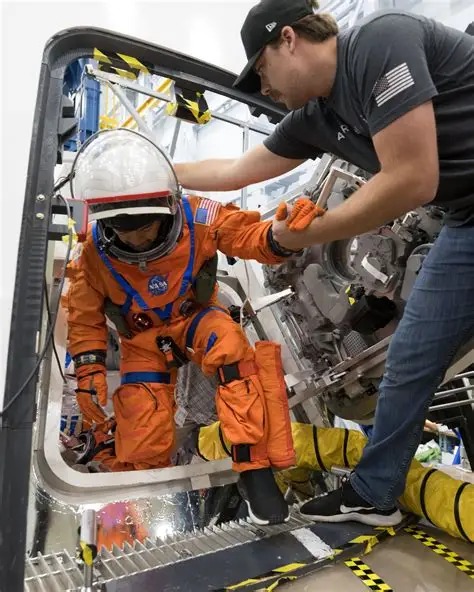
“More than 1,300 South African learners have successfully completed the 2026 Pathways to Space programme, a five-month aerospace training initiative supported by Boeing and Airbus. The programme combined theory with hands-on projects, including a high-altitude balloon mission, and connected learners with NASA astronauts and global aerospace experts.”
South Africa has taken a significant step forward in its ambition to become a leader in Africa’s space sector. On August 12, 2026, organisers announced that 1,313 South African learners graduated from the Pathways to Space programme, a STEM initiative designed to prepare young Africans for careers in aerospace engineering, astronautics, and space exploration. This achievement represents the largest single national cohort in the programme’s history and underscores South Africa’s growing commitment to cultivating homegrown talent for the global space economy.
Programme Overview
The Pathways to Space programme is a five-month educational initiative supported by Boeing in partnership with the Future African Space Explorers STEM Academy (FASESA). Since its inception in 2024, the programme has trained nearly 3,500 students across Africa, with South Africa joining for the first time in 2026.
Key features of the programme included:
- Curriculum: astronautical principles, systems engineering, materials science, and human factors.
- Practical projects: culminating in a high-altitude balloon mission to simulate real-world aerospace challenges.
- Mentorship: learners engaged with NASA astronauts, aerospace engineers, and university professors.
- Industry exposure: sessions with companies like Final Frontier Design, which specializes in space suit development.
South Africa’s Contribution
South Africa’s participation was particularly notable because of its scale. Out of 2,626 graduates across Africa, 1,313 were South African, representing 50% of the total cohort. Other participating countries included Ethiopia (832 learners), Nigeria (431 learners), and Kenya (50 learners).
This strong representation demonstrates South Africa’s educational infrastructure and its ability to mobilize large numbers of students into advanced STEM programmes. It also signals the country’s readiness to play a central role in Africa’s emerging space industry.
Hands-On Learning
One of the most impactful aspects of the programme was its emphasis on practical application. Learners were tasked with designing, launching, and analyzing data from high-altitude balloon missions, which mimic the challenges of aerospace engineering and satellite deployment.
These projects allowed students to:
- Apply theoretical knowledge in real-world scenarios.
- Develop teamwork and problem-solving skills.
- Gain exposure to data analysis techniques used in space missions.
By bridging classroom learning with hands-on experimentation, the programme ensured that graduates were not only academically prepared but also practically skilled.
Mentorship and Global Exposure
The mentorship component of the programme was equally transformative. Learners interacted with:
- Prof. Jeff Volosin, Astronautical and Space Engineering Chair at Capitol Technology University.
- Dr. Andrew Abercromby, biomedical engineer and former NASA aquanaut.
- Industry specialists from Final Frontier Design.
These sessions provided students with insights into cutting-edge aerospace research and career pathways. For many South African learners, this was their first direct exposure to international space professionals, offering inspiration and guidance for future pursuits.
National Impact
South Africa’s success in the Pathways to Space programme has several national implications:
- Education: It validates the country’s STEM education initiatives and highlights the importance of integrating aerospace studies into curricula.
- Industry: It strengthens South Africa’s position as a hub for aerospace talent in Africa.
- Policy: It supports government ambitions to expand the country’s role in space exploration and satellite technology.
Acting officials and educators have praised the achievement, noting that it aligns with South Africa’s broader goals of innovation, technology development, and global competitiveness.
Future Prospects
Organisers have announced plans to expand the programme further, with regional events scheduled for 2027 in the Western Cape and KwaZulu-Natal. The long-term ambition is to reach all nine provinces, ensuring that learners across South Africa have access to aerospace education opportunities.
This expansion will not only broaden participation but also deepen the country’s talent pipeline, preparing the next generation of engineers, scientists, and astronauts.
Conclusion
The graduation of 1,313 South African learners from the Pathways to Space programme marks a historic milestone in the country’s journey toward becoming a leader in Africa’s space sector. By combining rigorous academic training with hands-on projects and mentorship from global experts, the programme has equipped a new generation of South Africans with the skills and vision to contribute meaningfully to the global aerospace industry.
As South Africa looks ahead, this achievement serves as a powerful reminder that the nation’s youth are not only capable of competing on the world stage but also of shaping the future of space exploration.



