




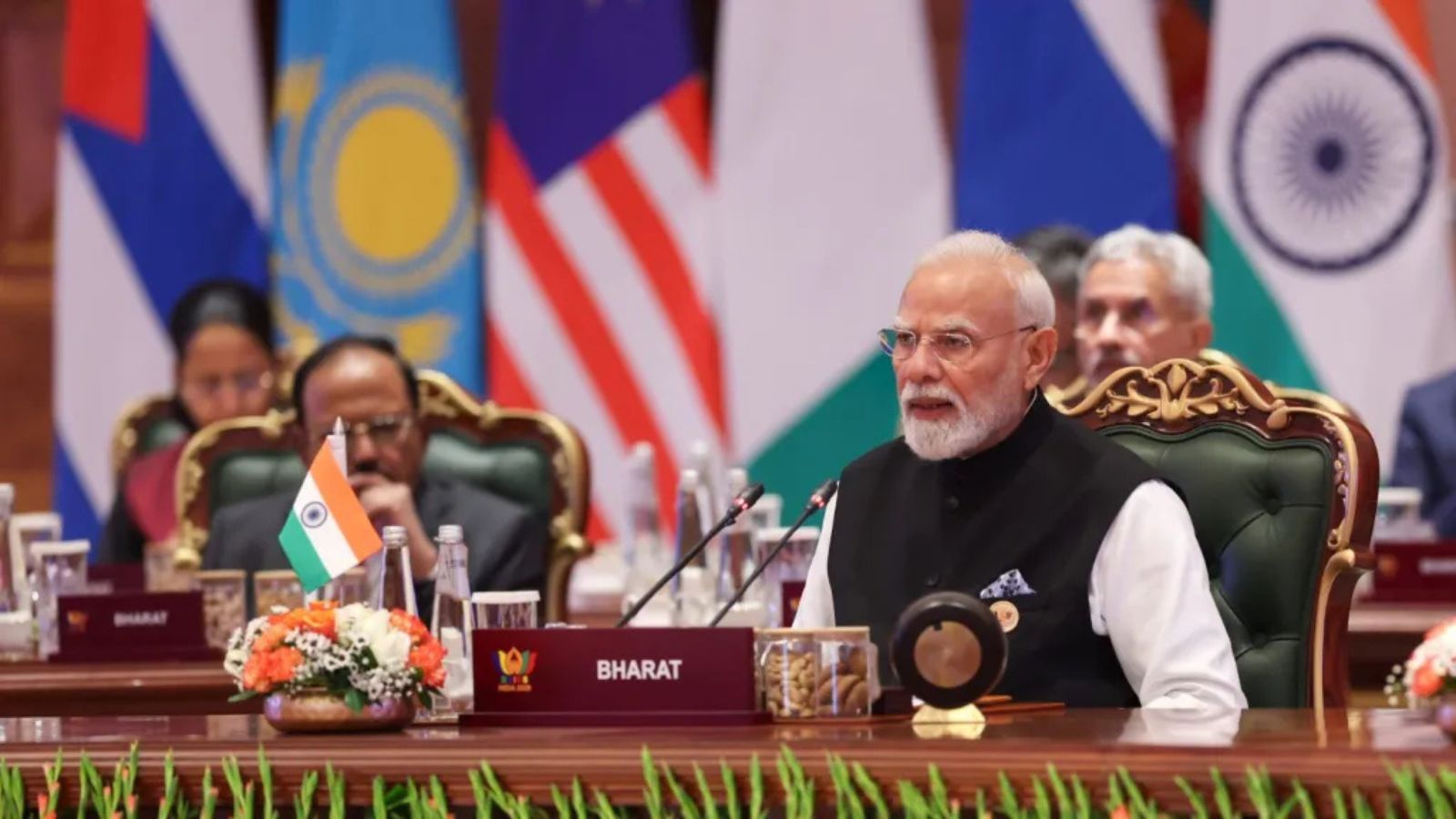
“President Cyril Ramaphosa urged BRICS nations to establish an international mechanism for independent scientific evaluation of AI, stressing the need for oversight similar to aviation and nuclear industries. He highlighted both the transformative potential of AI in medicine, education, and agriculture, and the dangers of unchecked development, including autonomous systems and employment disruption.”
Artificial Intelligence (AI) has rapidly evolved into one of the most transformative technologies of the 21st century. At the 18th BRICS Summit in New Delhi, South African President Cyril Ramaphosa emphasized the urgent need for global oversight of AI, positioning South Africa as a leading voice in shaping responsible governance frameworks. His remarks come at a time when AI’s capabilities are expanding at unprecedented speed, raising both opportunities and risks for societies worldwide.
The Context of the BRICS Summit
The BRICS Summit, marking its 20th anniversary, brought together leaders from Brazil, Russia, India, China, and South Africa to discuss inclusive global growth. Ramaphosa’s intervention on AI governance was timely, reflecting growing international concern about the pace of AI development. Industry leaders such as Dario Amodei, CEO of Anthropic, have already called for a slowdown in frontier AI research to allow regulatory frameworks to catch up.
Ramaphosa’s Key Proposals
Ramaphosa outlined several concrete measures:
- Independent Scientific Evaluation: Establishing a BRICS-led mechanism to audit AI systems.
- Mandatory Incident Reporting: Ensuring transparency when AI systems malfunction or cause harm.
- Human-Control Safeguards: Embedding principles that guarantee human oversight over autonomous systems.
- Investment in Sovereign AI Capacity: Supporting developing economies to build their own AI infrastructure.
Opportunities Highlighted
Ramaphosa acknowledged AI’s potential to:
- Transform medicine through genomic surveillance and vaccine development.
- Revolutionize education by personalizing learning experiences.
- Enhance agriculture with precision farming and climate resilience.
- Drive scientific discovery across multiple disciplines.
Risks Identified
Equally, he warned of dangers:
- Cyber operations that could destabilize nations.
- Biological weapon development aided by advanced AI models.
- Mass surveillance threatening privacy and civil liberties.
- Employment disruption as automation replaces human labor.
South Africa’s Position in Global AI Governance
South Africa’s call for oversight reflects its broader commitment to inclusive growth and technological sovereignty. By linking AI governance to disaster risk reduction, climate resilience, and critical mineral beneficiation, Ramaphosa positioned AI as integral to sustainable development.
Global Resonance
Ramaphosa’s stance resonates with debates in the US, EU, and China, where policymakers are grappling with how to regulate AI without stifling innovation. His emphasis on international cooperation underscores the need for collective action, particularly as AI systems increasingly operate across borders.
Implications for Africa
For Africa, AI governance is not just about risk mitigation but also about opportunity. Sovereign AI capacity could empower African nations to:
- Develop localized solutions for healthcare and agriculture.
- Strengthen economic independence by reducing reliance on foreign technologies.
- Create new industries and jobs in AI-driven sectors.
Conclusion
President Ramaphosa’s call at the BRICS Summit marks a pivotal moment in global AI governance. By advocating for oversight mechanisms, transparency, and human safeguards, South Africa is helping shape a future where AI serves humanity responsibly. The challenge now lies in translating these proposals into actionable frameworks that balance innovation with safety.



